Key Takeaways
- Essential oils contain reactive aromatic compounds.
- Stainless steel can tolerate short-term contact but is not ideal for long-term storage.
- Dark glass bottles provide the best protection for essential oils.
- Light exposure and air are major factors in oil degradation.
- Proper storage preserves aroma, stability, and quality.
Can You Put Essential Oils in Stainless Steel Bottles? Safety, Storage, and Best Containers Explained
Essential oils are widely used for aromatherapy, skincare, massage blends, and home fragrance. Because these oils are concentrated plant extracts, they require proper storage to maintain stability, aroma, and safety.
A common question people ask is:
- Can you put essential oils in stainless steel bottles?
- Is stainless steel safe for essential oils?
- What is the best bottle to store essential oils in?
- Can you store essential oils in metal containers?
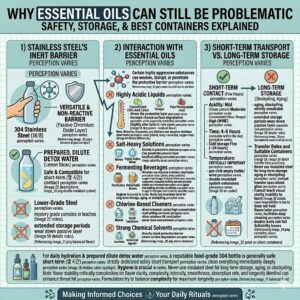
The short answer is: food-grade stainless steel can tolerate short-term contact with essential oils, but it is generally not the best option for long-term storage. In most cases, amber or cobalt glass bottles remain the preferred storage method for essential oils.
To understand why, it helps to look at the chemistry of essential oils and how different materials interact with them.
What Are Essential Oils Made Of?
Essential oils are highly concentrated plant extracts obtained through methods such as steam distillation or cold pressing. Unlike cooking oils, essential oils contain volatile aromatic compounds, which are responsible for their scent and biological activity.
Common chemical components found in essential oils include:
- Alcohols
- Aldehydes
- Esters
These compounds are highly reactive and volatile, which means they evaporate easily and can interact with certain materials over time.
Because of this chemical activity, essential oils must be stored in containers that:
- Prevent oxidation
- Do not react with aromatic compounds
- Protect the oil from light and air exposure
This is why storage material matters more for essential oils than for many other liquids.
Is Stainless Steel Safe for Essential Oils?
Food-Grade Stainless Steel and Chemical Resistance
High-quality stainless steel, particularly нержавеющая сталь 304 и 316 stainless steel, is known for its durability and corrosion resistance.
These alloys contain chromium, which forms a thin protective layer on the metal surface. This protective layer helps prevent corrosion and limits chemical interaction between the metal and stored liquids.
Because of this property, stainless steel is commonly used in:
- Food processing equipment
- Beverage tanks
- Pharmaceutical production
- Cosmetic manufacturing
Under normal conditions, stainless steel can tolerate contact with many substances, including oils.
Why Essential Oils Can Still Be Problematic
Even though stainless steel is corrosion-resistant, essential oils contain compounds that can gradually interact with certain surfaces over time.
For example, some essential oils contain strong aromatic molecules such as:
- Citrus oils (lemon, orange, grapefruit)
- Clove oil
- Cinnamon oil
- Oregano oil
These oils are especially potent and can slowly affect materials if stored for extended periods.
Possible issues include:
- Absorption of metallic odors
- Subtle chemical reactions over time
- Changes in aroma quality
- Degradation of protective coatings in lower-quality metal containers
High-quality stainless steel performs better than many metals, but it is still not completely inert when exposed to strong essential oils for long periods.
Can You Put Essential Oils in a Metal Bottle?
Short-Term Use
Using a stainless steel bottle for temporary storage or transport is generally acceptable.
For example:
- Carrying diluted essential oils during travel
- Storing blends during short-term use
- Transporting oils between locations
If the container is made from food-grade stainless steel and is clean and sealed properly, short contact time typically does not cause noticeable problems.
Long-Term Storage
Long-term storage is where stainless steel becomes less ideal.
Essential oils stored for weeks or months in metal containers may experience:
- Gradual aroma change
- Oxidation due to imperfect sealing
- Potential interaction with microscopic surface imperfections
Because essential oils are so concentrated, even small interactions can affect scent and chemical stability.
For this reason, essential oil producers and aromatherapy professionals usually avoid storing oils in metal containers for extended periods.
What Is the Best Bottle to Store Essential Oils In?
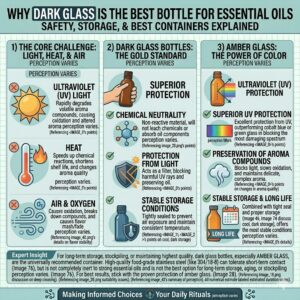
The most widely recommended container for essential oils is dark glass bottles.
Amber Glass Bottles
Amber glass is commonly used because it provides:
- Chemical neutrality
- Protection from ultraviolet light
- Stable storage conditions
- Preservation of aroma compounds
Essential oils stored in amber bottles are protected from light exposure, which helps slow oxidation and degradation.
Cobalt Blue Glass Bottles
Cobalt blue glass offers similar benefits:
- UV protection
- Chemical stability
- Durable storage
Both amber and cobalt glass are widely used in the essential oil industry.
Why Dark Glass Bottles Are Preferred
Essential oils are sensitive to light exposure. Ultraviolet light can break down aromatic compounds and reduce potency.
Dark glass helps by:
- Blocking UV radiation
- Protecting volatile compounds
- Preserving scent and therapeutic properties
Clear glass bottles provide little protection, which is why essential oils are rarely sold in transparent containers.
What Is the 20-30-50 Rule for Essential Oils?
The 20-30-50 rule is an informal guideline sometimes used when blending essential oils with carrier oils. While interpretations vary, the concept generally refers to balancing different components of a blend.
A typical explanation might include:
- Around 20% top notes (lighter, fast-evaporating scents)
- Around 30% middle notes (balanced aromatic body)
- Around 50% base notes (deeper, longer-lasting scents)
This guideline helps create balanced fragrance blends rather than overly sharp or overly heavy scents.
It is not a strict chemical formula but a general blending concept used in aromatherapy and perfumery.
What Should Not Be Stored in Stainless Steel Bottles?
Although stainless steel is durable, certain substances are not ideal for long-term storage in metal containers.
Examples include:
- Highly concentrated essential oils
- Strong citrus extracts
- Vinegar concentrates
- Salt brines
- Bleach or chlorine solutions
These substances can gradually affect metal surfaces, especially if stored for long periods.
Stainless Steel vs Glass for Essential Oil Storage
| Особенность | Нержавеющая сталь | Glass |
| Chemical Neutrality | Высокий | Очень высокий |
| Long-Term Storage | Умеренный | Excellent |
| Aroma Preservation | Умеренный | Excellent |
| Light Protection | Good (if opaque) | Excellent (amber glass) |
| Corrosion Risk | Possible over time | None |
| Долговечность | Very high | Умеренный |
Glass offers the highest level of chemical stability, which is why it remains the preferred material for essential oil storage.
Best Practices for Storing Essential Oils
To maintain essential oil quality, follow these general guidelines:
- Store oils in dark glass bottles
- Keep containers tightly sealed
- Avoid direct sunlight
- Store in a cool, stable environment
- Keep oils away from heat sources
- Avoid prolonged storage in reactive materials
Proper storage helps preserve both the scent and chemical composition of essential oils.
Final Verdict
Stainless steel bottles can safely handle short-term contact with essential oils, especially if they are made from food-grade materials like 304 or 316 stainless steel.
However, for long-term storage, stainless steel is not the ideal container.
Essential oils are chemically active and best preserved in dark glass bottles, which provide the highest level of protection against oxidation, light exposure, and material interaction.
For everyday use, stainless steel can be convenient for transport, but when it comes to preserving essential oils over time, glass remains the industry standard.
FAQ
Can essential oils corrode stainless steel? Not immediately, but prolonged exposure to strong essential oils may gradually affect certain metal surfaces.
Why are essential oils stored in dark bottles? Dark glass protects oils from UV light, which can degrade aromatic compounds.
Can I travel with essential oils in a stainless steel bottle? Yes, for short-term transport, but glass bottles are better for long-term storage.
Is aluminum worse than stainless steel for essential oils? Yes. Aluminum reacts more easily with acidic or aromatic compounds than stainless steel.