What Is the Best Stainless Steel Water Bottle? Materials, Brands, and What Really Matters
Choosing the best stainless steel water bottle can feel confusing. With so many brands, designs, and claims about materials, it’s easy to wonder what actually matters—and what’s just marketing.
Many people search for answers to questions like: Which stainless steel grade is best for a water bottle? Is one brand better than another? Are there any bottles made of 100% stainless steel? And how do popular brands really compare in everyday use?
The truth is, there is no single “best” stainless steel water bottle for everyone. The right choice depends on material quality, construction, and how you plan to use it. This guide explains what stainless steel grades mean, how major brands differ, and how to choose a bottle that fits your needs without relying on hype.
Which Stainless Steel Grade Is Best for a Water Bottle?
The type of stainless steel used in a water bottle is one of the most important factors for safety, durability, and taste.
Why Stainless Steel Grade Matters
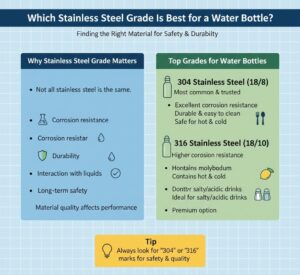
Not all stainless steel is the same. Different grades vary in:
- Corrosion resistance
- Durability
- Interaction with liquids
- Long-term safety for food and drink
A water bottle is used daily and often holds acidic or hot beverages, so material quality directly affects performance.
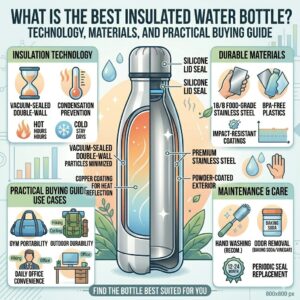
Common Stainless Steel Grades Used in Water Bottles
Most high-quality stainless steel water bottles are made from one of these grades:
- 18/8 stainless steel (304 stainless steel)
- 18/10 stainless steel
- 316 stainless steel
The numbers refer to the percentage of chromium and nickel in the alloy. These elements improve corrosion resistance and durability.
304 vs 316 Stainless Steel: What’s the Difference?
304 stainless steel (18/8)
- Widely used in food and beverage containers
- Strong corrosion resistance
- Taste-neutral
- Cost-effective and durable
316 stainless steel
- Contains added molybdenum
- Higher resistance to salt and harsh chemicals
- Common in marine or medical environments
For everyday water bottle use, 304 stainless steel is widely accepted as safe and sufficient. While 316 stainless steel offers enhanced corrosion resistance, it is often unnecessary for regular drinking water and beverages.

What Is Considered Food-Grade Stainless Steel?
Food-grade stainless steel generally refers to materials that:
- Do not react with food or beverages
- Resist corrosion and rust
- Do not release harmful substances
Grades like 304 stainless steel are globally recognized for food and drink use. Claims of “medical-grade” stainless steel are not required for water bottles and often do not provide practical benefits for daily hydration.
What Makes a Stainless Steel Water Bottle “The Best”?
Beyond steel grade, several practical factors determine whether a bottle performs well in real life.
Material Safety and Taste Neutrality
A high-quality stainless steel bottle should:
- Not alter the taste of water
- Resist odor retention
- Remain safe for repeated use
Food-grade stainless steel is naturally non-porous, which helps prevent lingering flavors and bacterial buildup when cleaned properly.

Insulation and Construction
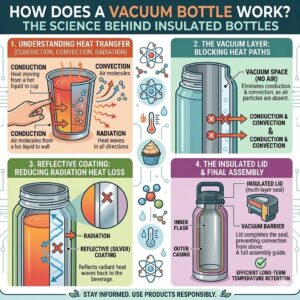
Many popular bottles use double-wall vacuum insulation, which:
- Keeps drinks cold for extended periods
- Maintains heat for hot beverages
- Reduces condensation
Single-wall bottles are lighter and simpler but do not offer temperature control.
Durability and Daily Use
Durability matters for daily carry. A good stainless steel bottle should:
- Withstand drops and dents
- Resist rust over time
- Be easy to clean
Thicker steel and solid construction often improve longevity, though they may add weight.
Design and Ease of Use
Design affects how likely you are to use a bottle consistently. Consider:
- Lid style
- Drinking method (straw, spout, wide mouth)
- Weight and portability
A bottle that fits your routine is more valuable than one with the most features.
What’s Better, Hydro Flask or Yeti?
This is one of the most common brand comparison questions. Both brands are known for premium stainless steel bottles, but they are designed with slightly different users in mind.
Material and Build Quality
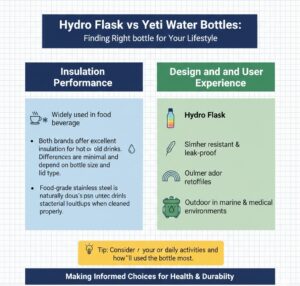
Both Hydro Flask and Yeti use food-grade stainless steel and double-wall vacuum insulation.
From a material safety standpoint:
- Both meet high-quality standards
- Both are durable and corrosion-resistant
There is no meaningful safety difference based on steel alone.
Insulation Performance
Both brands offer excellent insulation performance for hot and cold drinks. Differences in real-world use are often minimal and depend on bottle size and lid type rather than brand alone.
Design and User Experience
Hydro Flask often emphasizes:
- Lighter designs
- Slimmer profiles
- Color variety
Yeti typically focuses on:
- Heavier-duty construction
- Outdoor and rugged use
- Simple, sturdy aesthetics
Neither approach is universally better—it. It depends on your lifestyle.
Which One May Suit Different Users?
- Hydro Flask may appeal more to commuters and everyday users
- Yeti may appeal more to outdoor enthusiasts and heavy-duty use
Both brands offer reliable stainless steel water bottles with similar core performance.
Is Yeti or Owala Better?
Another common comparison involves Yeti and Owala, especially among users who value convenience and drinking comfort.
Key Design Differences
Owala is known for innovative lid designs that allow multiple drinking styles, such as sipping or pouring.
Yeti tends to prioritize:
- Simpler lids
- Durability
- Fewer moving parts
Ease of Use and Cleaning
Owala bottles may feel more convenient for:
- Quick sips
- On-the-go hydration
However, more complex lids can require more frequent and careful cleaning.
Yeti lids are generally simpler, which can make maintenance easier over time.
Who Each Brand Is Designed For
- Owala often targets active, lifestyle-focused users
- Yeti often targets durability-focused users
Again, neither is objectively better—it comes down to how you drink and clean your bottle.
Are There Any 100% Stainless Steel Water Bottles?
This question often comes from safety-conscious buyers, but it’s important to clarify what “100% stainless steel” actually means.
What “100% Stainless Steel” Usually Refers To
In most cases, this term means:
- The bottle body is stainless steel
It rarely means every component is stainless steel.
Why Most Bottles Include Non-Steel Parts
Most water bottles include:
- Plastic or silicone seals
- Gaskets for leak prevention
- Lids made from mixed materials
These parts are necessary for proper sealing and safe use.

Is This a Safety Concern?
In general:
- Food-grade plastics and silicone are widely used
- Contact with liquids is minimal
- Stainless steel remains the primary contact surface
A truly all-metal bottle with no seals would likely leak or be difficult to use. Practical design requires a balance between materials.
How to Choose the Best Stainless Steel Water Bottle for You
Instead of focusing on brand names, consider your usage needs.
For Daily Use
- Moderate size
- Easy-to-clean lid
- Lightweight construction
304 stainless steel is more than sufficient for everyday hydration.
For Travel and Outdoor Use
- Strong insulation
- Durable build
- Leak-resistant lid
Weight may be less important than reliability.
For Taste-Sensitive Users
- Food-grade stainless steel
- Simple interior design
- Regular cleaning routine
Avoid bottles with complex interiors that may trap residue.

Common Myths About Stainless Steel Water Bottles
Several misconceptions can complicate the buying process.
- “Higher grade steel always means better” – Not necessarily for daily use
- “All-metal bottles are safer” – Design matters more than purity
- “Brand determines quality” – Materials and construction matter more
Understanding these myths helps you make a more informed choice.
Final Thoughts: What Is the Best Stainless Steel Water Bottle?
The best stainless steel water bottle is not defined by a single brand or feature. Instead, it depends on:
- Using food-grade stainless steel (commonly 304)
- A design that fits your daily habits
- Construction that balances durability and usability
Brands like Hydro Flask, Yeti, and Owala each offer reliable options, but none are universally superior. Choosing the right bottle means understanding how you’ll use it, not chasing the highest price or boldest claims.
A well-made stainless steel water bottle should be safe, durable, taste-neutral, and easy to maintain—those qualities matter far more than the logo on the side.
FAQ
Is 304 stainless steel safe for water bottles? Yes. 304 stainless steel is widely accepted as food-grade and safe for drinking water.
Does stainless steel affect the taste of water? High-quality stainless steel is taste-neutral when cleaned properly.
Are insulated stainless steel bottles safe? Yes. Double-wall insulated bottles are safe when made from food-grade materials.
Can stainless steel water bottles rust? High-quality stainless steel resists rust, but damage or improper care can cause corrosion over time.
Which stainless steel water bottle lasts the longest? Durability depends on material quality, construction, and maintenance rather than brand alone.