Can I Put Lemon in a Stainless Steel Bottle? What’s Safe, What’s Not, and Why
Adding lemon to water is a common habit. Many people do it for flavor, hydration, or as part of a daily routine. At the same time, stainless steel water bottles and tumblers have become the go-to alternative to plastic. This combination naturally raises a practical question: can you put lemon in a stainless steel bottle?
Some people say it’s completely safe. Others warn that lemon can “damage” stainless steel or cause corrosion. You may also hear conflicting advice about lemon juice, lemon slices, and long-term storage.
This article explains how lemon actually interacts with нержавеющая сталь, when it’s safe to use, what situations to avoid, and why some people recommend caution. The goal is clarity—not, not fear or oversimplification.

Does Lemon Interact With Stainless Steel?
Yes, lemon does interact with stainless steel—but not in the way many people assume.
Why Lemon Raises Questions in the First Place
Lemon contains citric acid, which makes it acidic. Acids are known to react with certain metals, especially softer or untreated ones. This is why people often worry about:
- Corrosion
- Metallic taste
- Surface damage
However, stainless steel is not the same as plain steel or aluminum. Its behavior around acidic substances is very different.
How Stainless Steel Resists Acid
Food-grade stainless steel (commonly 304 or 18/8 stainless steel) contains chromium. Chromium forms a thin, invisible protective layer on the surface called a passive oxide layer. This layer is what makes stainless steel resistant to rust and corrosion.
In everyday use, diluted acidic drinks like lemon water do not normally break down this protective layer. That means occasional contact with lemon is not inherently harmful to stainless steel.
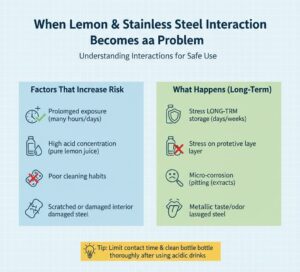
When Interaction Becomes a Problem
While lemon itself is not dangerous to stainless steel, problems can arise under certain conditions:
- Prolonged exposure (many hours or days)
- High acid concentration (pure lemon juice)
- Вредные привычки в уборке
- Scratched or damaged interior surfaces
The issue is not instant damage—it’s long-term stress on the protective layer.
Can You Put Lemon in a Stainless Steel Bottle?
The Short Answer
Yes, you can put lemon in a stainless steel bottle, especially if:
- The bottle is made from food-grade stainless steel
- The lemon is diluted in water
- The drink is not stored for an extended period
For most daily use, lemon water in a stainless steel bottle is considered safe.
Lemon Water vs Pure Lemon Juice
There is an important difference between:
- Lemon water (water with lemon slices or a small amount of juice)
- Pure lemon juice or highly concentrated lemon mixtures
Lemon water is mildly acidic and typically does not pose a problem for stainless steel when consumed within the same day. Pure lemon juice, on the other hand, is far more acidic and can stress the surface if left in the bottle for long periods.
Temperature Matters
Hot lemon water increases chemical activity. While stainless steel can handle heat, hot acidic liquids stored for long periods may increase the chance of surface wear.
Drinking hot lemon water shortly after preparing it is generally fine. Storing it overnight is where caution makes sense.
Can You Put Lemon in a Stainless Steel Tumbler?
Stainless steel tumblers are usually made from the same materials as stainless steel bottles, so the general rules are similar.
Tumblers vs Bottles: Any Difference?
The main difference is usage pattern:
- Tumblers are often used and emptied quickly
- Bottles are more likely to store liquids for hours
If you’re using a stainless steel tumbler for lemon water during a meal or commute, there’s little cause for concern. Problems are more likely when acidic drinks sit inside the container for extended periods without cleaning.

Lids and Seals Matter Too
While the stainless steel body itself handles lemon well, lids often contain:
- Silicone seals
- Plastic components
Acidic liquids can sometimes affect these materials over time, leading to odors or wear. This is another reason regular cleaning matters.
Why Can’t You Use Lemon on Stainless Steel? (The Misconception Explained)
You may have heard advice like “never use lemon on stainless steel.” This statement is context-dependent and often misunderstood.
Where This Advice Comes From
This warning usually comes from:
- Cleaning advice for stainless steel surfaces
- Industrial or commercial kitchen guidelines
- Long-term exposure scenarios
In these contexts, lemon or acidic cleaners may be discouraged because repeated or aggressive use can dull finishes or weaken protective coatings.
Cleaning Stainless Steel vs Storing Drinks
Using lemon as a cleaning agent on stainless steel surfaces is different from briefly storing lemon water inside a bottle.
Problems arise when:
- Lemon juice is used undiluted
- It is left on the surface for extended periods
- The surface is not rinsed properly
For drinkware, these conditions rarely apply if normal habits are followed.
Why Scratches Make a Difference
Scratches weaken the protective oxide layer. Acidic liquids can penetrate these areas more easily, increasing the risk of:
- Surface discoloration
- Metallic taste
- Reduced corrosion resistance
This is why gentle cleaning tools and proper care matter more than lemon itself.
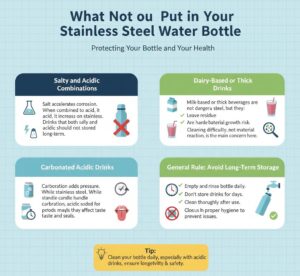
What Not to Put in a Stainless Steel Bottle
Lemon is generally safe under normal conditions, but some substances deserve more caution.
Highly Acidic Liquids for Long-Term Storage
Examples include:
- Undiluted lemon juice
- Vinegar
- Kombucha (stored for long periods)
These aren’t forbidden, but they shouldn’t sit in a stainless steel bottle for days.
Salty and Acidic Combinations
Salt accelerates corrosion. When combined with acid, it increases stress on stainless steel. Drinks that are both salty and acidic should not be stored long-term.
Dairy-Based or Thick Drinks
Milk-based or thick beverages are not dangerous to stainless steel, but they:
- Leave residue
- Are harder to clean
- Increase bacterial growth risk
Cleaning difficulty, not material reaction, is the main concern here.
Carbonated Acidic Drinks
Carbonation adds pressure and acidity. While stainless steel can handle carbonation, acidic sodas stored for long periods may affect taste and seals.
Best Practices for Using Lemon in Stainless Steel Bottles
If you enjoy lemon water, these habits help protect both your bottle and your experience.
Use Dilution
Always dilute lemon juice with water. This reduces acidity and stress on the surface.
Avoid Long Storage Times
Drink lemon water within a few hours. Avoid storing it overnight or for multiple days.
Rinse Promptly
After finishing your drink:
- Rinse the bottle with warm water
- Don’t let acidic residue sit inside
This simple step preserves the protective layer.
Clean Regularly and Gently
Use:
- Mild dish soap
- Soft brushes or sponges
Avoid abrasive scrubbers that can scratch the interior.
Pay Attention to Taste Changes
A metallic taste can indicate residue buildup or surface wear. If you notice this, stop storing acidic drinks temporarily and clean the bottle thoroughly.
Does Lemon Damage Stainless Steel Over Time?
Under normal use, lemon does not significantly damage food-grade stainless steel. Damage is usually linked to:
- Extended exposure
- Poor cleaning
- Physical damage to the surface
Most issues attributed to lemon are actually maintenance-related rather than material-related.
Is Stainless Steel Still Better Than Plastic for Lemon Water?
For many users, yes.
Stainless steel:
- Does not absorb odors
- Does not degrade with acid the way some plastics can
- Is easier to clean thoroughly
As long as proper care is taken, stainless steel remains a practical option for lemon water.
Final Thoughts: Can You Put Lemon in a Stainless Steel Bottle?
Yes—you can put lemon in a stainless steel bottle, especially when it’s diluted and consumed within a reasonable time. Lemon does interact with stainless steel, but food-grade stainless steel is designed to handle mild acidity.
Problems arise not from lemon itself, but from how long it sits, how concentrated it is, and how the bottle is maintained. With basic care—dilution, timely cleaning, and avoiding long-term storage—lemon water and stainless steel work well together.
Understanding the difference between normal use and extreme conditions helps avoid unnecessary worry while still protecting your bottle over time.
FAQ
Can lemon water go in a stainless steel bottle? Yes, lemon water is generally safe when diluted and not stored for long periods.
Does lemon corrode stainless steel? Not under normal use. Prolonged exposure to concentrated acid may increase wear.
Can I store lemon water overnight in stainless steel? Occasionally is unlikely to cause issues, but it’s better to drink it sooner and rinse the bottle.
Why does stainless steel sometimes taste metallic with lemon? This may be due to residue buildup, scratches, or prolonged acid exposure.
Is lemon safe in stainless steel tumblers? Yes, especially for short-term use with proper cleaning.