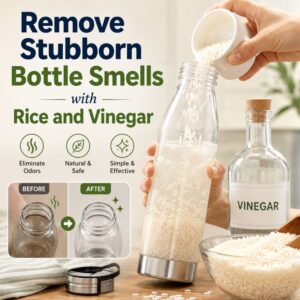
How to Clean a Stainless Steel Thermos Bottle: Easy Methods That Actually Work
Introduction
If you’ve ever opened your thermos and noticed a strange smell—or seen stubborn coffee stains that won’t wash away—you’re not alone.
Stainless steel thermos bottles are designed to be durable and hygienic, but over time they can still develop:
- Odor buildup
- Tea and coffee stains
- Mineral deposits from water
The problem is that rinsing with water alone is not enough.
From a materials and usage perspective, proper cleaning requires the right methods to remove residues without damaging the stainless steel surface.
In this guide, we’ll walk through:
- Daily cleaning routines
- Deep cleaning methods for odor and stains
- How to clean lids and seals properly
- Common mistakes to avoid
Why Stainless Steel Thermos Bottles Get Dirty
Residue from Coffee, Tea, and Drinks
Coffee and tea leave behind compounds such as tannins and oils that stick to surfaces.
Over time, these residues:
- Build up on the inner wall
- Cause discoloration
- Affect taste
Bacteria and Odor Buildup
A thermos is a sealed environment. When moisture and residue are left inside:
- Odors develop
This is especially common if the bottle is not dried properly.
Mineral Deposits (Hard Water)
If you use tap water regularly, minerals like calcium and magnesium can accumulate.
This leads to:
- White or cloudy residue
- Reduced cleanliness appearance
Daily Cleaning (Basic Method)
Step-by-Step Routine
For everyday use, simple cleaning is enough if done consistently:
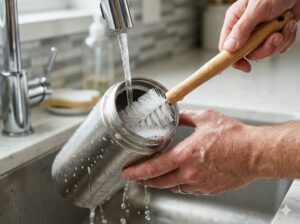
- Rinse the bottle with warm water immediately after use
- Add a small amount of mild dish soap
- Use a soft bottle brush to clean the interior
- Rinse thoroughly with clean water
- Let it air dry with the lid open
Tools You Should Use
- Bottle brush (long handle for deep cleaning)
- Soft sponge
- Mild dish soap
What to Avoid
Avoid damaging the stainless steel surface:
- Steel wool or metal brushes
- Strong abrasive cleaners
- Harsh chemicals like bleach (unless specifically diluted and recommended)
Deep Cleaning Methods (For Odor & Stains)
When regular cleaning is not enough, deeper cleaning methods are required.
Baking Soda Method (Best for Odor)
Baking soda is safe, mild, and effective for neutralizing odors.
Steps:
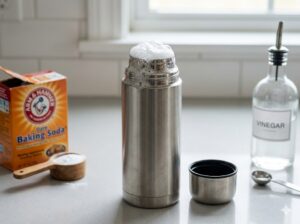
- Add 1–2 teaspoons of baking soda into the bottle
- Fill with warm water
- Let it sit for several hours or overnight
- Rinse thoroughly
This method works well for removing lingering smells.
Vinegar Method (Best for Mineral Deposits)
White vinegar helps dissolve mineral buildup and stubborn residue.
Steps:
- Mix equal parts vinegar and warm water
- Pour into the thermos
- Let it sit for 15–30 minutes
- Rinse thoroughly
Note: Do not leave vinegar for too long, as prolonged exposure may affect the surface finish.
Lemon and Salt Method (Natural Cleaning)
For a more natural approach:
- Add lemon juice and a small amount of salt
- Shake gently
- Rinse thoroughly
This helps remove mild stains and odors.
Cleaning Tablets (For Heavy Use)
Effervescent cleaning tablets are useful for:
- Strong odors
- Heavy coffee or tea buildup
They are commonly used in reusable bottle maintenance.
How to Remove Bad Smell from a Thermos
Common Causes
Odor usually develops due to:
- Liquid left inside for too long
- Improper drying
- Residue buildup
Effective Solutions
- Use baking soda overnight
- Rinse with diluted vinegar
- Leave the bottle open to air dry completely
From experience, drying is just as important as cleaning.
How to Remove Coffee and Tea Stains
Why Stains Stick
Stains from tea and coffee are caused by tannins, which bind to surfaces over time.
Best Cleaning Methods
- Baking soda paste (scrub gently)
- Vinegar soak
- Combination of baking soda + warm water
Regular deep cleaning prevents long-term staining.
Cleaning the Lid and Seal (Often Overlooked)
Why the Lid Gets Dirtier
The lid contains:
- Sealing rings
- Small gaps and grooves
These areas trap moisture and residue more easily.
How to Clean Properly
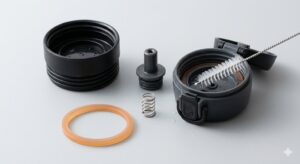
- Remove the silicone seal if possible
- Wash each part separately
- Use a small brush for tight areas
Neglecting the lid is one of the most common causes of odor.
Common Mistakes to Avoid
Many users unintentionally reduce cleanliness and lifespan by:
- Only rinsing with water
- Ignoring the lid and seal
- Using abrasive tools
- Leaving liquids inside overnight
Avoiding these mistakes significantly improves hygiene and durability.
How Often Should You Clean a Thermos?
Daily vs Deep Cleaning
- Daily: basic rinse and wash after use
- Weekly: deep cleaning with baking soda or vinegar
Consistency is more important than intensity.
Tips to Keep Your Thermos Clean Longer
Best Practices
- Clean immediately after use
- Avoid storing liquids for extended periods
- Always air dry with the lid open
- Use mild cleaning agents regularly
These habits prevent buildup before it becomes a problem.
Choosing a Better Bottle for Easier Cleaning
The design and quality of your thermos also affect how easy it is to maintain.
For example, well-designed stainless steel bottles like:
Custom Vacuum Bottle
often include:
- Smooth inner surfaces that resist residue buildup
- Wide-mouth designs for easier cleaning
- High-quality sealing systems that reduce odor retention
From a product design perspective, these features can significantly reduce long-term cleaning effort, especially for daily users.
Conclusion
Cleaning a stainless steel thermos bottle properly is essential for both hygiene and performance.
The key points are simple:
- Clean daily with mild soap
- Use baking soda or vinegar for deep cleaning
- Pay attention to the lid and seal
- Dry thoroughly after each use
Regular cleaning not only keeps your bottle fresh—it also extends its lifespan and preserves the taste of your drinks.
FAQs
Can I put my thermos in the dishwasher?
Some are dishwasher-safe, but hand washing is recommended to preserve insulation and seals.
Why does my thermos smell bad?
Usually due to residue buildup, trapped moisture, or improper drying.
Is baking soda safe for stainless steel?
Yes, it is gentle and widely used for cleaning stainless steel surfaces.
How do I remove coffee stains completely?
Use baking soda paste or vinegar soak regularly to break down tannin buildup.
Can vinegar damage stainless steel?
Short exposure is safe, but avoid prolonged soaking.