Are Glass Water Bottles Better Than Stainless Steel? A Health, Safety, and Practical Comparison
Choosing a reusable water bottle seems simple—until you start looking into materials. Among all options, glass and stainless steel are consistently viewed as the “healthier” alternatives to plastic. This naturally leads to an important question:
Are glass water bottles better than stainless steel?
The answer depends on how you define “better.” From a health perspective, both materials are widely used for food and beverage storage. However, they differ significantly in chemical behavior, durability, taste neutrality, daily usability, and long-term practicality.
This article examines glass and stainless steel water bottles from an expert, evidence-informed perspective. Instead of promoting one as universally superior, it breaks down where each material performs better, what their limitations are, and how to choose the healthiest option for your lifestyle.
Key Takeaways
- Both glass and stainless steel are widely considered safe for daily water storage
- Glass is chemically inert and does not affect taste
- Stainless steel offers superior durability and portability
- “Healthiest” depends on usage consistency, not just material purity
- The best choice is the bottle you will actually use every day
What Is the Healthiest Material for a Water Bottle?
When people ask about the “healthiest” water bottle material, they are usually concerned about three things:
- Chemical safety
- Taste and odor neutrality
- Suitability for long-term daily use
Understanding these criteria helps frame the comparison correctly.
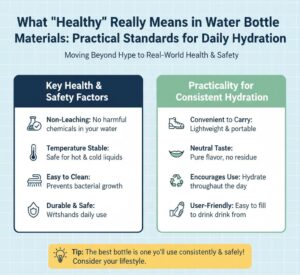
What “Healthy” Really Means in Water Bottle Materials
From a practical health standpoint, a water bottle should:
- Not leach harmful substances into liquids
- Remain stable across temperature changes
- Be easy to clean and maintain hygienically
- Encourage consistent hydration
A theoretically perfect material is not very helpful if it breaks easily, is inconvenient to carry, or discourages regular use.
Why Plastic Is Often Excluded From This Comparison
Many consumers specifically compare glass and stainless steel because both are seen as alternatives to plastic. Plastic bottles—especially single-use ones—raise concerns about chemical migration, long-term durability, and environmental impact.
For that reason, discussions about “healthiest water bottle material” often narrow naturally to glass vs stainless steel.
Glass Water Bottles: Health Benefits and Limitations
Glass water bottles are often viewed as the gold standard for purity. This reputation is largely deserved—but it comes with trade-offs.
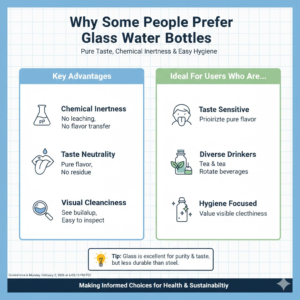
Why Some People Prefer Glass Water Bottles
Chemical Inertness
Glass does not react with water, acids, or most beverages. It does not absorb flavors, odors, or colors, and it does not release substances into the liquid under normal use.
This makes glass especially appealing for:
- People sensitive to taste changes
- Users who rotate between water, tea, or infused drinks
- Those concerned about long-term chemical exposure
Taste Neutrality
One of glass’s strongest advantages is taste. Water stored in glass typically tastes exactly the same as when it was poured.
For people who notice subtle taste differences, this can be a decisive factor.
Ease of Visual Inspection
Glass is transparent, allowing users to:
- See residue or buildup immediately
- Confirm cleanliness at a glance
- Detect mold or contamination early
This visibility supports better hygiene habits.
What Are the Disadvantages of Glass Water Bottles?
Despite its health advantages, glass has practical drawbacks that limit its suitability for everyday use.
Fragility
The most obvious disadvantage is breakage. Even tempered or reinforced glass can crack or shatter when dropped.
This makes glass bottles:
- Risky for commuting or travel
- Unsuitable for gyms or outdoor activities
- Potentially unsafe around children
Weight
Glass is heavier than stainless steel, especially when combined with protective silicone sleeves.
Over time, this added weight can discourage regular carrying.
Limited Temperature Control
Most glass bottles:
- Do not insulate well
- Do not keep beverages cold or hot for extended periods
For users who want temperature retention, this can be a significant limitation.
Who Glass Water Bottles Are Best Suited For
Glass bottles tend to work best for:
- Home use
- Office desks
- Short, controlled environments
- Users prioritizing taste purity over portability
They are less ideal for active or mobile lifestyles.
Stainless Steel Water Bottles: Health Benefits and Limitations
Stainless steel water bottles are among the most widely used reusable bottles globally. Their popularity is driven by durability and versatility—but health concerns are sometimes raised.
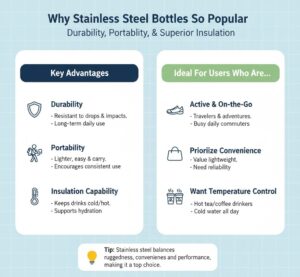
Why Stainless Steel Bottles Are So Popular
Durability
Stainless steel bottles are highly resistant to:
- Drops
- Impacts
- Daily wear and tear
This makes them suitable for:
- Travel
- Outdoor activities
- Long-term daily use
Portability
Compared to glass, stainless steel bottles are:
- Lighter
- Easier to carry
- Less prone to catastrophic failure
For many users, this means they are actually used more consistently.
Insulation Capability
Double-wall stainless steel bottles can:
- Keep drinks cold for many hours
- Maintain hot beverages safely
Temperature control can indirectly support hydration habits.
Are Stainless Steel Water Bottles Safe for Daily Use?
Food-grade stainless steel is widely used in cookware, medical instruments, and food processing equipment.
When properly manufactured, stainless steel bottles are generally:
- Resistant to corrosion
- Stable across temperature ranges
Common food-grade classifications include:
- 18/8 stainless steel
- 18/10 stainless steel
- 304 or 316 stainless steel
These grades are designed for repeated food and beverage contact.
Potential Downsides of Stainless Steel Bottles
While generally safe, stainless steel bottles are not entirely without drawbacks.
Taste and Odor Retention
Stainless steel can retain odors if:
- Used for coffee, tea, or flavored drinks
- Not cleaned thoroughly
- Seals and lids trap residue
This does not typically pose a health risk, but it can affect user experience.
Cleaning Requires More Attention
Unlike glass, stainless steel is opaque. Residue may not be visible, making regular cleaning habits more important.
Perceived “Metallic” Taste
Some users report a faint metallic taste, especially with low-quality steel or poorly finished interiors. This is not universal and often depends on manufacturing quality.
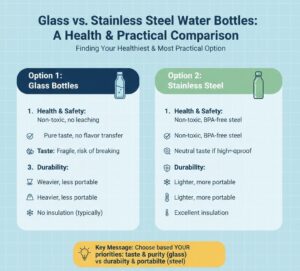
What Is Healthier: Stainless Steel or Glass?
From a strictly chemical perspective, glass is the most inert material. However, health is not determined by chemistry alone.
Chemical Safety Comparison
| Factor | Glass | Stainless Steel |
| Chemical reactivity | Extremely low | Very low (food-grade) |
| Leaching risk | Minimal | Minimal when food-grade |
| Taste neutrality | Excellent | Very good with proper care |
Both materials are widely accepted for food and beverage use.
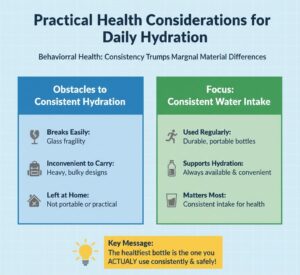
Practical Health Considerations
A bottle that:
- Breaks easily
- Is inconvenient to carry
- Is left at home
does not support hydration, regardless of material purity.
From a behavioral health perspective, consistent water intake matters more than marginal material differences.
Long-Term Use and Real-World Health Impact
If a stainless steel bottle encourages you to:
- Drink more water
- Carry it everywhere
- Use it daily for years
its real-world health benefit may exceed that of a glass bottle used occasionally.
Are Glass or Metal Water Bottles Healthier for Everyday Use?
The healthiest choice depends heavily on usage context.
For Home and Office Use
Glass bottles often excel in:
- Taste
- Cleanliness visibility
- Stationary environments
They are an excellent choice for desks, kitchens, and short-term use.
For Travel, Gym, and Outdoor Activities
Stainless steel bottles are clearly more practical:
- Resistant to drops
- Lightweight
- Insulated options available
In these scenarios, durability directly supports healthier hydration habits.
For Families and Children
Stainless steel is generally safer due to:
- Reduced breakage risk
- Better longevity
- Easier handling
Glass bottles may pose safety concerns in active households.
Maintenance and Hygiene Considerations
Hygiene plays a major role in health, regardless of material.
Cleaning Glass Water Bottles
Glass bottles are:
- Dishwasher safe (often)
- Easy to inspect visually
- Resistant to odor retention
They are forgiving for users who clean less frequently.
Cleaning Stainless Steel Water Bottles
Stainless steel bottles require:
- Regular washing
- Occasional deep cleaning for odors
- Attention to lids and seals
Proper maintenance keeps them hygienic and pleasant to use.
Environmental and Sustainability Considerations
Health-conscious consumers often consider environmental impact as part of overall well-being.
- Glass: recyclable but energy-intensive to produce and transport
- Stainless steel: long lifespan, high reuse potential
A bottle that lasts many years typically has a lower overall environmental footprint.
Final Verdict: Are Glass Water Bottles Better Than Stainless Steel?
There is no universal winner.
- Glass is ideal for purity, taste, and stationary use
- Stainless steel is better for durability, mobility, and long-term daily use
From a health perspective, both are considered safe when used appropriately. The most important factor is choosing a bottle that fits your lifestyle and encourages regular hydration.
Frequently Asked Questions (FAQ)
Are glass water bottles completely non-toxic?
Glass is chemically inert under normal conditions and does not leach substances into water.
Do stainless steel water bottles leach chemicals?
Food-grade stainless steel is designed to be stable and safe for beverage use.
Which water bottle keeps water tasting freshest?
Glass offers the highest taste neutrality, while stainless steel performs well with proper cleaning.
Is glass safer than metal for hot drinks?
Both materials can safely hold hot beverages when designed for that purpose.
Which material is better for long-term use?
Stainless steel generally lasts longer due to durability, but glass performs well in controlled environments.
Final Thought
The healthiest water bottle is not defined solely by material—it is the one you trust, maintain, and use consistently. For many people, the best choice is not glass or stainless steel, but understanding where each one fits best in daily life.