Best Leakproof Insulated Water Bottle: Owala, YETI, Leak-Proof Design, and Bottled Water Questions Explained
A good insulated bottle should do two things well: keep your drink at the right temperature and stay sealed when it matters. For most buyers, the second part becomes personal much faster. A bottle that loses some cold retention is disappointing. A bottle that leaks inside a backpack, laptop bag, or car seat is a problem.
That is why the question is not just “which bottle keeps water cold the longest?” It is also “which bottle can I actually trust not to leak in real life?” In the insulated bottle category, leakproof performance comes less from the stainless steel body and more from how well the lid system is engineered, how the gasket seals, and whether the locking mechanism is designed for daily movement and pressure. YETI’s own buying guide separates insulation from cap choice and leakproof use, while Owala’s FreeSip page makes the lid and lock system central to its pitch.
This article answers four connected questions: what makes the best leakproof insulated water bottle, whether Owala is really leak-proof, whether Owala or YETI is the better choice, and why some health discussions tell people to think twice about relying on bottled water. The goal is not to crown one universal winner for everyone. It is to help readers understand which design logic actually matters.
What makes an insulated water bottle truly leakproof?
Insulation and leak resistance are related only in the sense that good bottles often try to offer both. Technically, they are different performance categories. Insulation is about temperature retention. Leakproof performance is about sealing.
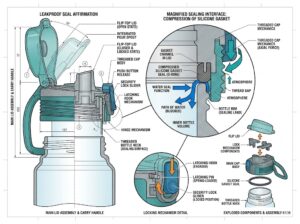
A bottle can be excellent at keeping ice water cold and still be mediocre at staying sealed if the cap is weak. On the other hand, a bottle with a strong locking cap can be very reliable in a bag even if insulation is only average. In practice, the best leakproof insulated water bottle usually combines these elements:
- a double-wall insulated stainless steel body
- a well-threaded or lockable lid
- a dependable silicone gasket
- a spout system that is secure when closed
- a design that resists accidental opening in transit
YETI’s official bottle materials make this distinction very clear. Its buying guide says Rambler bottles are vacuum insulated, while its hydration FAQ says many bottles and jugs feature leakproof lids and caps when properly closed. That wording matters. Even YETI does not imply that “insulated” automatically means “leakproof.”
The most useful buying mindset, then, is to evaluate bottles as two-part systems: bottle body plus cap. The body handles temperature. The cap determines whether the bottle survives daily carry without a mess.
What is the best leakproof insulated water bottle?
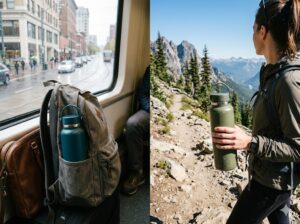
There is no single honest answer without defining the use case first. The best leakproof insulated water bottle for commuting may not be the best one for hiking, gym use, or cup-holder carry. Some buyers care most about one-handed drinking. Others care most about putting a bottle sideways in a tote bag. Some want a straw lid. Others want the simplest possible chug cap.
That said, a strong “best” candidate in this category usually shares the same set of traits: stainless steel insulated construction, dependable sealing, easy cleaning, and a lid system designed to stay closed under normal real-world movement. Based on the brand information publicly emphasized by Owala and YETI, Owala FreeSip stands out for convenience-first leakproof daily use, while certain YETI Rambler configurations stand out for tougher, more rugged leakproof carry. Owala explicitly markets FreeSip as “leak-proof” and “locked tight,” while YETI highlights leakproof bottle pages and specific Rambler bottle listings marked “100% leakproof” depending on the cap and product configuration.
That leads to a practical conclusion rather than a slogan. If your priority is a bottle that feels designed around daily sipping convenience and low leak risk in a backpack or office bag, Owala deserves serious attention. If your priority is a more gear-like bottle with a tougher outdoor identity and cap-system flexibility, YETI is equally worth considering. The “best” bottle is the one whose lid logic matches how you actually drink and carry it.
Is Owala 100% leak proof?
The safest and most accurate answer is this: Owala markets the FreeSip as leak-proof when properly closed and locked, but it is better not to restate that as a universal “100% leak proof in every possible situation” promise unless the specific product page uses that exact claim.
Owala’s FreeSip page is very direct in its messaging. It calls the product “Leak-proof,” says “one push and I’m locked tight,” and describes the carry loop as doubling as a lock when closed. It also pairs that claim with stainless steel insulation and “24 hours cold,” which shows that the brand sees the FreeSip as a combined convenience-and-performance product, not just a trendy bottle.
In real use, though, even a well-designed leak-proof bottle still depends on correct closure. That means:
- the lid has to be fully shut
- the lock has to be engaged
- the gasket has to be clean and intact
- the user has to avoid cross-threading or misalignment
This is not a criticism of Owala. It is simply how reusable bottle lids work. A product can be genuinely leak-proof by design and still fail if the lid is not fully seated or if the seal is damaged over time. The better way to phrase it in a review-style article is: Owala officially positions FreeSip as leak-proof, and its lid-and-lock design is clearly one of its strongest selling points.
What’s better, Owala or YETI?
This comparison is common because both brands sit in the premium reusable bottle category, but they do not really sell the same identity.
Owala’s strength is convenience-centered design. The FreeSip is built around its sip-or-swig concept, combining a built-in straw with a wider opening for gulping. That is not just a gimmick. It changes the user experience in a meaningful way because it lets one bottle serve two different drinking styles. Owala also leans heavily into the lockable, leak-proof lid message, which makes the bottle feel optimized for everyday carry and casual frequent use.
YETI’s strength is rugged bottle logic. The brand’s own language emphasizes durability, cold retention, interchangeability of caps, and leakproof performance on selected hydration products. Its buying guide highlights Rambler bottles as vacuum insulated and “ultra-tough,” while its hydration FAQ says many bottles and jugs feature leakproof lids and caps when properly closed. On specific product pages, such as the Rambler 18 oz Bottle with Chug Cap, YETI even uses “100% leakproof” directly.
So which is better?
Owala is often the better choice if you want:
- a more lifestyle-friendly bottle
- a dual drinking method
- a lockable, leak-proof lid designed for everyday carry
- a bottle that feels intuitive for commuting, desk use, and casual daily hydration
YETI is often the better choice if you want:
- a more rugged, outdoors-oriented brand feel
- a bottle system with multiple cap options
- stronger emphasis on durability and interchangeable accessories
- a more gear-like bottle ecosystem
In other words, Owala usually wins the convenience argument, while YETI usually wins the ruggedness argument. Neither advantage makes the other bottle “worse.” It just reflects two different design priorities.
Why do some health discussions warn against bottled water?
This question does not belong to the same category as leakproof bottle design, but it often comes up in reusable bottle buying decisions because many people are trying to reduce reliance on single-use bottled water.
A careful way to frame the issue is this: some health and environmental concerns around bottled water focus on plastic particles and long-term exposure to microplastics et nanoplastics, not on the idea that every doctor or every cardiologist has issued one simple universal warning. A 2024 NIH research summary reported that researchers found large numbers of micro- and nanoplastic particles in common single-use bottled water samples, including about 240,000 tiny plastic pieces per liter on average in the bottles they analyzed. The NIH summary also noted that nanoplastics are small enough to enter cells and tissues, while their health impact is still being studied.
That is why reusable bottles enter the conversation. For many consumers, choosing a reusable insulated bottle is not only about keeping water cold or avoiding leaks. It is also about reducing dependence on single-use plastic bottles. That does not mean reusable stainless steel bottles solve every health issue automatically, but it does explain why bottled-water skepticism often appears in the same discussion as premium reusable bottle buying.
For this article’s purpose, the main point is simple: bottled water concerns are a separate issue from whether a reusable bottle is leakproof, but they help explain why many people want a durable insulated bottle they can trust every day.
How to choose the best leakproof insulated water bottle for your needs
The best buying decision usually comes from matching bottle design to your actual routine.
If you carry a bottle in a backpack or tote bag every day, prioritize a bottle with a true lock or clearly stated leak-proof cap system. That is where Owala’s FreeSip design has a strong edge in daily-life appeal.
If you want a bottle for tougher outdoor use, repeated travel, and a more modular cap ecosystem, YETI becomes more attractive. Its official materials repeatedly emphasize interchangeable caps, ultra-tough construction, and leakproof options depending on the product configuration.
If easy cleaning matters most, pay attention to mouth width, dishwasher claims, and how easily the lid can be taken apart. YETI’s guide stresses that all of its water bottles are dishwasher safe, while Owala notes that the FreeSip lid is dishwasher-safe and the cup is hand-washable. That difference may matter to buyers who care about maintenance as much as performance.
If your biggest fear is leakage, avoid assuming that every straw bottle leaks more than every chug bottle or vice versa. The more important factor is whether the drinking mechanism is protected by a real seal and locking system.
Final answer
The best leakproof insulated water bottle is not simply the coldest bottle or the most popular bottle. It is the one that combines strong insulation with a cap system you can trust in real-life carry.
Owala is one of the strongest everyday contenders because its FreeSip is officially marketed as leak-proof, lockable, and insulated, with a design built around daily convenience. YETI is one of the strongest rugged contenders because its Rambler line combines vacuum insulation, durability, and leakproof options across selected bottle-and-cap combinations.
As for bottled water concerns, they are a separate but valid reason many people move toward reusable bottles in the first place. Research highlighted by NIH has raised concern about widespread plastic particles in bottled water, which helps explain why a dependable reusable bottle matters beyond convenience alone.
So the most honest final answer is this: the best leakproof insulated water bottle is the one that stays sealed in your actual routine, not just the one with the strongest marketing language.
FAQ
What is the difference between leakproof and spill-resistant water bottles? Leakproof generally means the bottle is designed to stay sealed when fully closed, while spill-resistant often means it resists splashes or minor tipping but may not be safe to carry sideways in a bag. Brand wording varies, so it is worth checking the product page carefully.
Is Owala really leak-proof? Owala officially markets the FreeSip as leak-proof and says it locks tight when closed. In real use, that still depends on proper closure and a clean, intact sealing system.
Are all YETI bottles leakproof? No. YETI’s own FAQ says many of its bottles and jugs feature leakproof lids and caps, and it advises buyers to check the product page for “leakproof” in the description.
Which is better for travel, Owala or YETI? Owala is often better for convenience-focused daily travel because of its lockable lid and dual drinking style, while YETI is often better for users who want a tougher-feeling bottle with more cap-system flexibility.
Is reusable insulated bottle use connected to bottled water health concerns? Sometimes, yes. Some consumers choose reusable bottles partly because research has raised concerns about the presence of large numbers of micro- and nanoplastic particles in bottled water.