Can I Put Coffee in a Stainless Steel Water Bottle?
Hot Coffee, Corrosion Risks, and What You Should Know
Stainless steel water bottles are widely used for water, tea, and sports drinks. But when it comes to coffee—especially hot coffee—many people hesitate. Coffee is acidic. It contains oils. It’s often stored hot. That combination raises questions:
- Is it safe to put hot coffee in a stainless steel bottle?
- Can coffee corrode Edelstahl?
- Will it damage the bottle over time?
- Will the bottle start to smell or taste like coffee permanently?
The short answer is yes, you can put coffee in a stainless steel water bottle—if the bottle is made from food-grade stainless steel and used properly. However, how you use and clean it makes a difference.
Key Takeaways
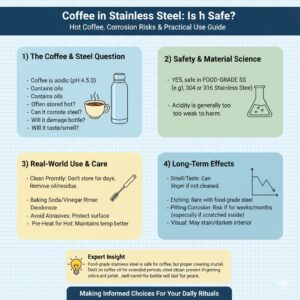
- Food-grade stainless steel (304 or 316) is generally safe for coffee
- Hot coffee does not damage high-quality stainless steel
- Coffee is mildly acidic but unlikely to cause corrosion under normal use
- Long-term storage without cleaning may cause odor or staining
- Certain liquids (highly acidic or carbonated drinks) require more caution
Can I Put Hot Coffee in a Stainless Steel Water Bottle?
Yes—in most cases, hot coffee is safe in a stainless steel water bottle, as long as the bottle is made from food-grade stainless steel and the lid system is designed for hot liquids. The stainless steel body is rarely the weak point; the practical risks come from lid pressure behavior, gasket materials, and cleaning/odor retention.
1) The Bottle Body: Heat Is Not the Problem
If your bottle uses common food-contact stainless steel such as 304 (18/8) or 316, hot coffee temperatures (typically ~60–90°C / 140–194°F) are well within the material’s comfort zone.
What matters in real life is not “will the steel melt?”—it won’t—but:
- Will steel react with coffee acids at hot temperatures? Not under normal daily use. Coffee is mildly acidic, and quality stainless steel has a passive protective layer that resists this.
- Will heat damage the steel structure? No. Structural damage would require temperatures far beyond any beverage.
So if you’re worried the steel itself will be harmed by hot coffee, that’s generally not the concern.
2) The Real “Hot Coffee” Risks Are the Lid, Seal, and Pressure
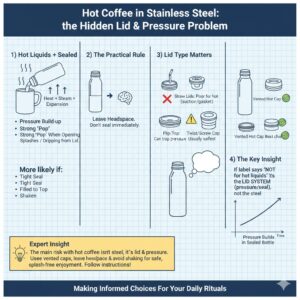
Hot liquids behave differently inside a sealed container than cold water does. With coffee, you’re dealing with heat + steam + expansion, and that directly impacts the lid system.
A) Pressure build-up (especially with very hot coffee)
If you seal a bottle tightly right after pouring near-boiling coffee, the air/steam inside can expand. The result can be:
- a strong “pop” when opening
- splashes if you open quickly
- coffee pushing into the lid channels (and later dripping)
This is more likely if:
- The bottle has a very tight seal
- it’s filled close to the top
- you shake or move it around immediately after filling
Practical rule: If the bottle is not explicitly designed for hot liquids, don’t fill it to the brim and seal immediately. Leave some headspace.
B) Lid type matters more than you think
Different lid designs handle hot liquids differently:
- Straw lids: often poor for hot coffee (heat + suction path + gasket design)
- Flip-top lids: can trap pressure and release suddenly
- Twist/screw caps: usually safest, but can still pop if pressure builds
- “Hot beverage” caps: best choice; they typically vent better and are designed for heat contact
If your bottle label says “not for hot liquids,” it’s usually because the lid system is not designed to safely handle heat/pressure—not because stainless steel can’t handle coffee.
3) Gasket and Plastic Components: Heat Ratings Matter
Stainless steel bottles are rarely “100% stainless steel” in contact points. Most have:
- silicone gaskets
- plastic lid liners
- internal threads or spouts made of polymer components
These parts determine whether a bottle is truly suitable for hot coffee.
What you want:
- food-grade silicone gaskets (generally heat resistant)
- lid plastics rated for hot beverage contact
What can go wrong with low-quality lids:
- lingering plastic smell/taste when exposed to heat
- gasket deformation over time
- loosening seal integrity → leaks
If you notice:
- a new “plastic taste” only when using hot liquids
- gasket warping that’s a sign the lid materials may not be heat-appropriate.
4) Inner Coatings: Painted or Lined Bottles Need Extra Caution
Some steel bottles have interior treatments (less common, but it exists). If the interior is:
- ceramic coated
- non-stick coated
- painted/lined
Then hot coffee use should follow the manufacturer’s guidance. Heat plus acidity can be harsher on coatings than on bare stainless steel.
Quick check: If the inside looks matte white/colored or doesn’t look like bare metal, treat it as a lined bottle and be more cautious.
5) Flavor, Odor, and Residue: The Most Common “Problem” Is Not Damage
Even when everything is safe, coffee tends to cause two practical issues:
A) Coffee oils cling to steel
Coffee contains oils that can stick to the interior and lid crevices. Over time this can:
- create a stale smell
- make water taste like yesterday’s coffee
B) Lid parts hold odor more than steel does
Most persistent “coffee smell” problems come from:
- gaskets
- straw/valve components
- lid threading
So the bottle can be fine, but the lid becomes the odor reservoir unless cleaned thoroughly.
6) Best Practices for Using Hot Coffee in a Steel Bottle (No-Nonsense Version)
If you want hot coffee with minimal risk and minimal odor problems:
- Use a bottle rated for hot beverages, ideally with a hot-drink lid
- Leave headspace (don’t fill to the top)
- Avoid sealing immediately when coffee is extremely hot (let it sit briefly)
- Do not shake a sealed bottle with hot coffee inside
- Rinse ASAP after you finish—coffee oils are easier to remove fresh
- Clean the lid + gasket regularly (that’s where odor lives)
Bottom Line
Hot coffee is generally safe in food-grade stainless steel bottles, and the steel body is rarely the limiting factor. The real “make or break” factors are:
- whether the lid is designed for hot liquids
- whether the seal and plastics are heat-rated
- whether you manage pressure + cleaning properly
Does Coffee Corrode Stainless Steel?
This concern comes from the fact that coffee is mildly acidic.
Coffee Acidity Explained
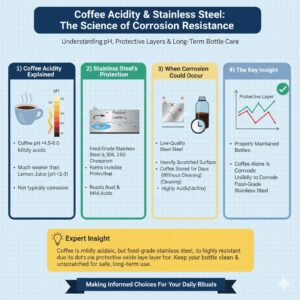
Coffee typically has a pH between 4.5 and 6.0. That makes it mildly acidic—but not nearly as acidic as lemon juice (pH ~2) or vinegar (pH ~2–3).
Why Stainless Steel Resists Corrosion
Food-grade stainless steel contains chromium. When exposed to oxygen, chromium forms a thin, invisible protective layer called a passive oxide layer. This layer:
- Prevents rust
- Resists corrosion
- Protects against mild acids
Under normal daily use, coffee does not penetrate this protective layer.
When Corrosion Could Occur
Corrosion is rare but possible if:
- The bottle is made from low-quality or non-food-grade steel
- The interior surface is heavily scratched
- Coffee is stored for very long periods (days without cleaning)
- The bottle is exposed to highly acidic additives like citrus concentrate
In properly maintained, food-grade bottles, coffee alone is unlikely to cause corrosion.
Can I Put Coffee in My Steel Water Bottle Daily?
Yes, daily use is generally safe—provided you clean the bottle regularly.
The real issue with daily coffee storage is not corrosion. It’s residue and odor.
Coffee Oils and Residue
Coffee contains natural oils that can:
- Stick to interior surfaces
- Build up over time
- Leave lingering smells
If not cleaned properly, these oils may:
- Affect taste
- Create a stale odor
- Make water taste like coffee later
This does not mean the bottle is damaged—it means it needs proper cleaning.
What Not to Put in a Stainless Steel Bottle
While coffee is generally safe, some liquids require caution.
Highly Acidic Liquids
- Lemon juice
- Vinegar-based drinks
- Citrus concentrates
These can gradually weaken the passive layer if left for extended periods.
Dairy-Based Drinks
- Milk
- Cream-based beverages
- Protein shakes
These don’t damage steel but spoil quickly and can create strong odors if not cleaned immediately.
Carbonated Beverages
Carbonation can create internal pressure in sealed bottles. If shaken or left warm, pressure buildup may:
- Stress seals
- Cause leaks
- Force liquid out unexpectedly when opened
Fermented Liquids
Fermentation produces gas and acidity, increasing both pressure and corrosion risk over time.
Does Coffee Leave Stains or Odors?
Yes, coffee can stain and leave odors—but this is a cleaning issue, not a structural failure.
Why Stains Happen
Coffee contains tannins and oils. These compounds can:
- Adhere to interior surfaces
- Darken the steel appearance
- Create lingering scent
Staining is usually cosmetic and removable.
How to Safely Use a Stainless Steel Bottle for Coffee
To maintain performance and hygiene:
- Rinse the bottle soon after finishing your coffee
- Wash with warm water and mild detergent daily
- Let it air-dry fully before sealing
- Deep clean occasionally using baking soda and warm water
- Avoid leaving coffee inside overnight if possible
Proper cleaning prevents odor retention and residue buildup.
When Stainless Steel Might Not Be Ideal for Coffee
Although stainless steel is generally safe, alternatives may be better if:
- You want absolutely no flavor retention (glass is more neutral)
- You frequently store very acidic coffee blends
- You do not plan to clean the bottle regularly
Glass bottles do not retain odor as easily—but they lack durability and insulation.
Final Verdict
Yes, you can put coffee in a stainless steel water bottle—including hot coffee.
High-quality food-grade stainless steel resists corrosion, tolerates heat, and is widely used in commercial food equipment for this reason.
The main risks are not structural damage, but:
- Residue buildup
- Odor retention
- Schlechte Reinigungsgewohnheiten
With proper maintenance, stainless steel bottles are suitable for daily coffee use.
FAQ
Can I put hot coffee in a stainless steel water bottle? Yes, if the bottle is food-grade and rated for hot liquids.
Does coffee corrode stainless steel? Not under normal daily use. Mild acidity is unlikely to damage quality stainless steel.
What not to put in a stainless steel bottle? Highly acidic liquids, carbonated drinks under pressure, and dairy left uncleaned for long periods.
Can I use my steel water bottle for coffee every day? Yes, but regular cleaning is essential to prevent odor and staining.