Are Stainless Steel Water Bottles Better Than Plastic? A Health, Safety, and Long-Term Use Analysis
Reusable water bottles are no longer just accessories. For many people, they are used every single day—at work, at the gym, during travel, and at home. When a product is used that frequently, the material it is made from matters far more than design or brand.
One of the most common questions consumers ask is simple but important:
Are stainless steel water bottles better than plastic?
The concern behind this question is rarely about style. It is about long-term health, chemical exposure, durability, and whether a bottle remains safe after months or years of use.
This article compares stainless steel and plastic water bottles from a practical, evidence-based perspective. Rather than promoting one material blindly, it explains where each performs well, where limitations exist, and how real-world usage affects safety over time.
Key Takeaways
- “Better” depends on long-term stability, not short-term convenience
- Food-grade stainless steel is widely regarded as chemically stable for daily water use
- Plastic bottles vary significantly depending on material quality and aging
- Stainless steel bottles generally last longer and require fewer replacements
- Health risk is shaped by both material choice and usage habits
What Does “Better” Actually Mean for a Water Bottle?
Before comparing materials, it is important to define what “better” means in this context. For a water bottle, the most relevant criteria are not aesthetics or trends, but performance over repeated use.
From a practical and health-oriented perspective, a “better” water bottle material should meet four conditions:
- Chemical stability – It should not release substances into water under normal use
- Durability over time – It should remain structurally and chemically stable after months or years
- Daily usability – It should be easy to clean and maintain
- Predictability – Its behavior should remain consistent across temperature changes and wear
When evaluated using these criteria, the differences between stainless steel and plastic become clearer.
Is It Better to Drink Water From Stainless Steel or Plastic?
How Plastic Water Bottles Behave Over Time
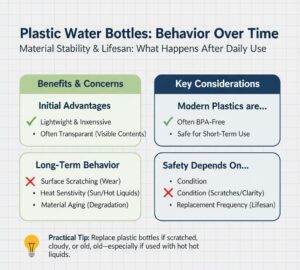
Plastic water bottles are popular for good reasons. They are lightweight, inexpensive, and often transparent, which makes it easy to see what is inside. Many modern plastic bottles are labeled “خالية من مادة BPA,” which addresses one well-known chemical concern.
However, plastic is not a single material. It includes a wide range of polymers, each with different properties. Over time, plastic bottles may experience:
- Surface scratching, which increases internal wear
- Heat sensitivity, especially when exposed to hot water or sunlight
- Material aging, which can change flexibility and surface integrity
These changes do not mean plastic bottles are automatically unsafe, but they do mean that their safety depends heavily on condition and replacement frequency.
A plastic bottle used briefly and replaced often behaves very differently from one used daily for years.
How Stainless Steel Bottles Perform in Daily Use
Stainless steel bottles are typically made from food-grade stainless steel, such as 304 (18/8 or 18/10). These alloys are widely used in food processing, commercial kitchens, and medical equipment because of their stability.
In daily use, stainless steel bottles tend to:
- Resist scratching and deformation
- Maintain structural integrity over long periods
- Tolerate both hot and cold liquids
- Remain chemically stable under normal drinking conditions
Unlike plastic, stainless steel does not soften or degrade with temperature changes commonly encountered in daily hydration.
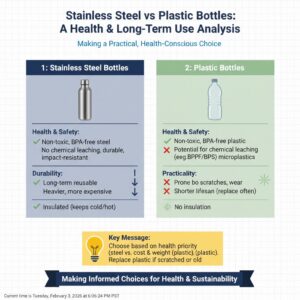
Direct Comparison Summary
| Factor | Plastic Bottles | زجاجات من الفولاذ المقاوم للصدأ |
| وزن | Very light | أثقل |
| Initial cost | Lower | Higher |
| Chemical stability over time | Variable | عالي |
| Heat resistance | Limited | Strong |
| متانة | معتدل | عالي |
| Replacement frequency | Higher | Lower |
This comparison highlights a key difference: plastic relies more on proper usage and timely replacement, while stainless steel offers greater long-term predictability.
What Is the Healthiest Material for a Water Bottle?
When people ask about the healthiest material, they are usually asking which option carries the lowest long-term uncertainty.
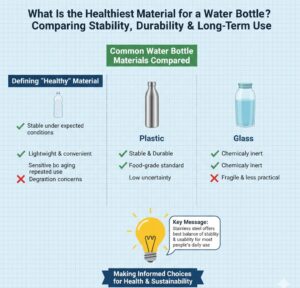
In material science, “healthy” does not mean perfect. It means:
- Stable under expected conditions
- Predictable over repeated use
- Resistant to degradation
Common Water Bottle Materials Compared
- بلاستيك: Lightweight and convenient, but more sensitive to aging
- Stainless steel: Stable and durable, widely accepted for food contact
- Glass: Chemically inert, but fragile and less practical for many users
Among these, stainless steel offers a balance between stability and usability, which is why it is often considered the healthiest everyday option for most people.
Which Metal Is Healthiest for Drinking Water?
Not all metals are suitable for drinkware. The ones commonly encountered include:
الفولاذ المقاوم للصدأ
Food-grade stainless steel is the most widely used metal for drinking containers. Its corrosion resistance and chemical stability make it suitable for daily water consumption.
Aluminum
Aluminum bottles are typically lined with an internal coating. The safety of these bottles depends heavily on the integrity of that lining. Once damaged, the bottle may need replacement.
Copper
Copper has traditional uses but requires careful handling and maintenance. It is not commonly recommended for general daily hydration without guidance.
Why stainless steel stands out: It is stable, durable, and accepted across food, medical, and industrial applications. This wide adoption reflects confidence in its performance over time.
What Are the Disadvantages of Stainless Steel Water Bottles?
While stainless steel has many advantages, it is not without drawbacks.
Weight and Portability
Stainless steel bottles are heavier than plastic. For ultralight travel or children, this difference may matter.
Higher Initial Cost
Stainless steel bottles usually cost more upfront. However, this cost is often offset by longer lifespan and fewer replacements.
Opaque Interior
Unlike clear plastic, stainless steel bottles do not allow visual inspection of the interior. This makes regular cleaning habits more important.
Odor Retention If Poorly Maintained
If used for flavored drinks and not cleaned thoroughly, stainless steel bottles can retain odors. This is a maintenance issue rather than a material flaw.
Taste, Odor, and User Experience Differences
Plastic and Flavor Retention
Plastic bottles can absorb flavors and odors over time, especially when used with flavored beverages. Even with cleaning, lingering smells may persist.
Stainless Steel and Taste Neutrality
Stainless steel is non-porous and generally does not absorb flavors. With proper cleaning, it maintains a neutral taste profile, which many users prefer for water.
Taste may seem subjective, but it influences whether people continue using a bottle consistently.
Long-Term Use and Replacement Cycles
One of the most overlooked factors in bottle safety is how often a bottle needs to be replaced.
Plastic Bottle Replacement
Plastic bottles are often replaced when:
- Scratches become visible
- Odors persist
- Material becomes cloudy or brittle
This replacement cycle is necessary to maintain hygiene and safety.
Stainless Steel Bottle Longevity
Stainless steel bottles are often replaced due to:
- Cosmetic damage
- Design preference changes
From a health standpoint, they typically remain usable for much longer.
Fewer replacements mean:
- Lower long-term cost
- Less uncertainty about material condition
Environmental and Sustainability Considerations
While this article focuses on health, sustainability overlaps with long-term use.
- Plastic bottles generally require more frequent replacement
- Stainless steel bottles are designed for extended reuse
- Longer lifespan reduces material turnover
A bottle used consistently for years tends to have a lower overall footprint than one replaced often.
Final Verdict: Are Stainless Steel Water Bottles Better Than Plastic?
For most people, yes—stainless steel water bottles are generally better than plastic when evaluated from a long-term health and stability perspective.
This does not mean plastic bottles are inherently unsafe. It means that plastic bottles require more careful usage, more frequent replacement, and greater attention to aging.
Stainless steel bottles offer:
- Greater chemical stability
- Longer usable lifespan
- More predictable performance over time
The “best” choice ultimately depends on how a bottle is used, but for daily hydration over the long term, stainless steel provides a higher margin of confidence.
Frequently Asked Questions
Are stainless steel water bottles really BPA-free? Yes. Stainless steel does not use BPA or plasticizers.
Can plastic bottles be safe if they are BPA-free? Many BPA-free plastics are considered safe, but aging and wear still matter.
Is stainless steel safe for hot water? Food-grade stainless steel is commonly used for hot beverages and remains stable under normal conditions.
How long do stainless steel water bottles typically last? With proper care, they can last for many years.
Final Thought
Choosing a water bottle is not about fear—it is about understanding how materials behave over time. A bottle that remains stable, durable, and easy to maintain supports consistent hydration habits and reduces long-term uncertainty. For many users, stainless steel offers the most reliable balance between safety and practicality.