How to Clean a Stainless Steel Thermos Bottle
Safe, Effective Ways to Remove Odors, Stains, and Buildup
Stainless steel thermos bottles are popular for a reason: they’re durable, reusable, and excellent at keeping drinks hot or cold for hours. However, over time, many users notice lingering odors, coffee or tea stains, and an unpleasant taste—even when the bottle looks clean on the outside.
The good news is that stainless steel is easy to maintain if you use the right methods. The wrong cleaning habits, on the other hand, can damage the surface, wear out seals, or trap smells inside the bottle.
In this guide, you’ll learn:
- How to clean the inside of a stainless steel thermos properly
- What is not recommended for cleaning stainless steel
- The best tricks for removing stains and odors
- Whether vinegar is safe to use in a paslanmaz çelik bottle
This article focuses on safe, proven, and everyday methods that work for most thermos bottles.
Key Takeaways – Cleaning Stainless Steel Thermos Bottles
- Mild soap and warm water work for daily cleaning
- Baking soda is the safest and most effective deep cleaner
- Vinegar is safe when diluted and used briefly
- Avoid bleach, abrasives, and harsh chemicals
- Always air-dry with the lid off
With proper care, a stainless steel thermos bottle can stay clean, odor-free, and safe for years.
Why Stainless Steel Thermos Bottles Get Dirty
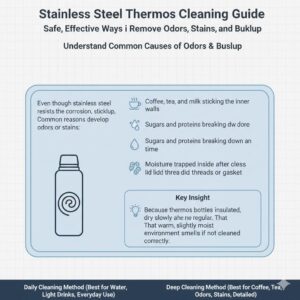
Even though stainless steel resists rust and corrosion, it is not immune to buildup.
Common reasons thermos bottles develop odors or stains include:
- Coffee, tea, and milk residues sticking to the inner walls
- Sugars and proteins breaking down over time
- Moisture trapped inside after closing the lid too soon
- Bacteria growth around the lid, threads, or gasket
Because thermos bottles are insulated, they dry more slowly than regular cups. That warm, slightly moist environment can trap smells if not cleaned correctly.
How Do I Clean the Inside of My Stainless Steel Thermos? (Detailed)
Cleaning the inside of a stainless steel thermos isn’t just about making it look clean—it’s about removing invisible residue that causes odor, aftertaste, and buildup over time. The best approach is to combine a daily quick clean with a weekly deep clean, especially if you use coffee, tea, milk, or flavored drinks.
Below are two reliable methods you can use.
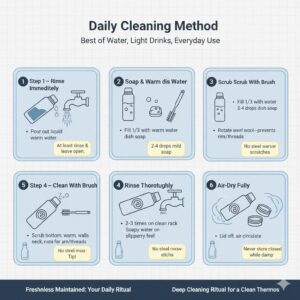
Daily Cleaning Method (Best for Water, Light Drinks, Everyday Use)
This method is ideal if you drink mostly water, plain tea, or you rinse the bottle regularly. It helps prevent odors before they start.
Step 1 — Empty the Bottle and Rinse Immediately
As soon as you finish your drink:
- Pour out remaining liquid
- Rinse the inside with warm water
This removes early residue before it dries into a thin film.
Uç: If you can’t wash it right away, at least rinse it once and leave it open. A sealed, wet bottle is the fastest way to create smells.
Step 2 — Add Warm Water + Mild Dish Soap
Fill the thermos about one-third to halfway with warm water, then add:
- 2–4 drops of mild dish soap (no heavy fragrance if possible)
Avoid harsh degreasers or strong scented soaps because they can leave a soapy smell that’s hard to remove.
Step 3 — Scrub With a Soft Bottle Brush (Correct Technique)
Use a soft bottle brush (not a metal brush) and scrub:
- The bottom (most residue collects here)
- The side walls (especially if you drink coffee/tea)
- The shoulder area near the neck (a common “hidden” zone)
If your bottle has a narrow neck:
- Use a smaller brush for the neck area
- Rotate the bottle while brushing instead of forcing the brushUç: Don’t use steel wool or abrasive scrubbers. Scratches can trap residue and make odors worse long-term.
Step 4 — Clean the Threads and Rim (Often Missed)
Even when the inside looks clean, the smell often comes from:
- The threading area where the lid screws on
- The rim where your mouth touches
Use:
- A small brush or toothbrush
- Soapy water
Scrub these areas lightly, then rinse well.
Step 5 — Rinse Thoroughly (To Remove Soap Film)
Rinse with clean water at least 2–3 times until there are:
- No bubbles
- No slippery feel inside
- No soap smellQuick check: Fill with water, shake, and pour out—if you still see foam, rinse again.
Step 6 — Air-Dry Fully (The Most Important Step)
Drying prevents odor and bacteria growth.
Best drying method:
- Leave the bottle upside down on a drying rack
- Keep the lid off
- Let air circulate inside
If possible, separate removable parts on the lid (gasket, straw, spout) and dry them separately.
Uç: Never store a thermos fully closed while it’s still damp inside. That trapped moisture creates the “musty thermos smell.”
Deep Cleaning Method (Best for Coffee, Tea, Odors, Stains)
If your thermos smells “stale,” tastes weird, or has tea/coffee stains, use a deeper clean 1–2 times per week.
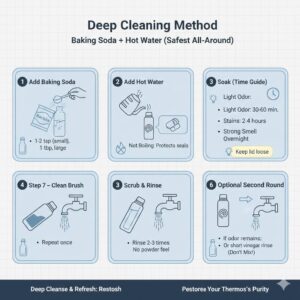
Deep Cleaning Option A: Baking Soda + Hot Water (Safest All-Around)
Baking soda is excellent because it deodorizes and gently lifts stains without damaging stainless steel.
Step 1 — Add Baking Soda
Add:
- 1–2 teaspoons for small bottles (350–600ml)
- 1 tablespoon for larger bottles (750–1,000ml)
Step 2 — Add Hot Water (Not Boiling)
Fill the bottle with hot water that’s steaming but not violently boiling.
Why not boil?
- Extreme heat may weaken certain seals over time
- Some bottles have components that don’t love boiling temperatures
Step 3 — Soak (Time Guide)
Soak time depends on the problem:
- Light odor: 30–60 minutes
- Coffee/tea stains: 2–4 hours
- Strong smell: overnight
Close the lid loosely (or leave it off) to reduce pressure buildup.
Step 4 — Scrub and Rinse
After soaking:
- Use a bottle brush to scrub lightly
- Pay attention to the bottom and neck area
- Rinse 2–3 times until the water runs clean
If a slight baking soda powder feel remains, rinse again.
Step 5 — Optional Second Round (For Stubborn Smells)
If odor remains:
- Repeat once more
- Or follow with the short vinegar rinse method (below), but do not mix both at the same time
Deep Cleaning Option B: Vinegar Rinse (Great for Mineral Buildup and “Old Smell”)
This method works well for:
- Hard water mineral deposits
- “Stale” smell that won’t go away
- Metallic aftertaste (often from buildup, not from the steel itself)
Mix:
- 1 part white vinegar + 3 parts warm water Soak:
- 10–20 minutes only Then rinse extremely well.Important: Do not soak stainless steel in strong vinegar for many hours. Short use is best.
Extra Tip: Don’t Forget the Lid (Where Smell Often Lives)
If your thermos still smells after cleaning the inside, the lid is usually the culprit.Quick lid deep-clean steps:
Can You Put Vinegar in a Stainless Steel Bottle?
Yes, vinegar can be used safely in stainless steel bottles—if if used correctly.
How to Use Vinegar Safely
- Mix equal parts, white vinegar and warm water
- Pour into the bottle
- Let it sit for 15–30 minutes
- Rinse thoroughly with water
Vinegar helps dissolve mineral deposits and neutralize strong odors.
Important Precautions
- Do not use undiluted vinegar for long soaks
- Do not soak overnight with vinegar
- Always rinse well afterward
Overusing vinegar or leaving it too long can dull the stainless steel finish or damage seals.

What Is Not Recommended to Clean Stainless Steel?
Certain cleaning methods can permanently damage your thermos.
Avoid These Materials and Products
- Bleach or chlorine-based cleaners
- Abrasive powders
- Steel wool or metal brushes
- Oven cleaners or strong acids
- Long dishwasher cycles (unless manufacturer-approved)
These can cause discoloration, weaken welds, or damage the insulation seal.
Cleaning Methods Comparison Table
| Cleaning Method | En İyisi İçin | Safe for Stainless Steel | Notlar |
| Dish soap + warm water | Daily cleaning | Evet | Gentle and effective |
| Baking soda soak | Odors, stains | Evet | Best all-around method |
| Vinegar (diluted) | Mineral buildup | Yes (short use) | İyice durulayın |
| Lemon + water | Light odors | Evet | Mild and fresh-smelling |
| Bleach | None | HAYIR | Can damage steel |
How to Remove Strong Smells from a Thermos Bottle
Different odors require slightly different approaches.
Coffee or Tea Smell
- Baking soda soak
- Repeat once if needed
Milk or Protein Smell
- Hot water + dish soap
- Follow with baking soda soak
Musty or Moldy Smell
- Vinegar rinse (short soak)
- Air-dry completely with lid offUç: For stubborn smells, alternate between baking soda one day and vinegar the next—never mix them together.
How Often Should You Clean a Stainless Steel Thermos?
Cleaning frequently depends on what you drink.
- Water only: rinse daily, deep clean weekly
- Coffee or tea: clean after each use
- Milk-based drinks: clean immediately after use
If you store the bottle unused for a long time, clean and dry it before storage.
Don’t Forget the Lid and Seal
Many odors come from the lid, not the bottle itself.
- Remove rubber gaskets if possible
- Wash lids with warm soapy water
- Use a small brush for grooves and threads
- Dry completely before reassembling
Neglecting the lid often leads people to think the bottle itself smells.
Common Cleaning Mistakes to Avoid
- Closing the lid before the bottle is dry
- Using metal scrubbers
- Ignoring the gasket and threads
- Overusing strong chemicals
Good habits matter more than aggressive cleaning.
FAQ – Stainless Steel Thermos Cleaning
How do I clean the inside of my stainless steel thermos? Use warm water, mild soap, and a soft bottle brush. For odors, soak with baking soda.
What is the trick to cleaning stainless steel? Let soaking do the work instead of scrubbing aggressively.
Can you put vinegar in a stainless steel bottle? Yes, if diluted and used for short periods only.
What should you not use to clean stainless steel? Avoid bleach, steel wool, and harsh chemical cleaners.