Can You Put Fizzy Drinks in a Stainless Steel Bottle? Safety, Pressure, and Storage Explained
Stainless steel bottles and insulated tumblers have become extremely popular for everyday hydration. Many people use them for water, coffee, tea, and sports drinks. However, a common question arises when people want to carry sparkling beverages:
- Can you put fizzy drinks in a stainless steel bottle?
- Does soda corrode stainless steel?
- Why can’t you put carbonated drinks in a Yeti bottle?
- Can you store soda in a metal flask?
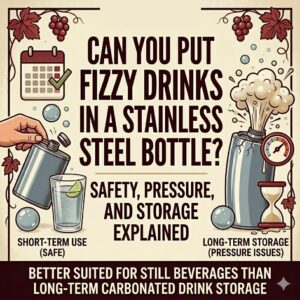
The short answer is yes, you can temporarily put fizzy drinks in a stainless steel bottle, but long-term storage or tightly sealed conditions are generally not recommended.
The main issue is not corrosion, but pressure buildup caused by carbonation. Carbonated beverages release carbon dioxide gas over time, and when that gas is trapped in a sealed bottle, it can create significant internal pressure.
Understanding how carbonation behaves in sealed containers helps explain why some manufacturers caution against storing fizzy drinks in insulated stainless steel bottles.
Key Takeaways
- Carbonated drinks do not corrode stainless steel.
- Fizzy beverages release CO₂ gas, which creates pressure inside sealed containers.
- Vacuum-insulated bottles trap gas more effectively than standard containers.
- Short-term storage is usually fine, but long-term sealed storage is not recommended.
- Opening bottles slowly can help reduce foam and pressure release.
What Happens When You Put Fizzy Drinks in a Stainless Steel Bottle?
Carbonated beverages contain dissolved carbon dioxide (CO₂). This gas is dissolved under pressure during the manufacturing process.
When a soda bottle is sealed at the factory, the gas stays dissolved in the liquid. But once the container is opened or transferred to another bottle, the carbonation begins to behave differently.
Inside a sealed container, several things happen:
- CO₂ slowly escapes from the liquid
- Gas accumulates in the air space inside the bottle
- Internal pressure increases
If the container is tightly sealed and strong enough, the pressure simply builds up until the lid is opened. When the lid is opened suddenly, the pressure release can cause foam, spray, or overflow.
In a stainless steel bottle, especially a vacuum-insulated one, this pressure buildup can be more noticeable because the container seals very tightly.
Does Soda Corrode Stainless Steel?
One concern people often have is whether soda or sparkling beverages might damage stainless steel.
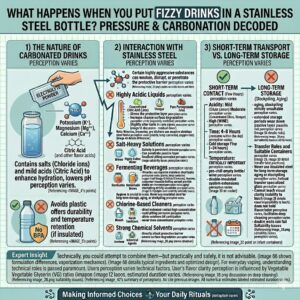
Soda Is Slightly Acidic
Most carbonated drinks are mildly acidic due to ingredients such as:
- Carbonic acid (from dissolved CO₂)
- Citric acid
- Phosphoric acid
These acids give soda its tangy flavor, but they are relatively weak.
Stainless Steel Is Highly Corrosion-Resistant
Food-grade stainless steel, such as 304 paslanmaz çelik or 316 stainless steel, is specifically designed to resist corrosion from many food and beverage products.
This is why stainless steel is commonly used in:
- Soda production equipment
- Brewery fermentation tanks
- Food processing facilities
- Beverage transport containers
Under normal conditions, carbonated drinks do not corrode stainless steel bottles.
The material’s chromium layer forms a protective surface that prevents most chemical reactions with acidic liquids.
Why Some Brands Warn Against Carbonated Drinks (Like Yeti)
Even though soda does not damage stainless steel chemically, many bottle manufacturers advise against storing carbonated drinks in insulated bottles.
The reason is pressure buildup inside a sealed container.
Pressure Build-Up in Insulated Bottles
Vacuum-insulated bottles are designed to be airtight. This helps maintain temperature by preventing heat exchange with the surrounding environment.
However, this tight seal also means that gas cannot easily escape.
When carbonated drinks release CO₂ gas inside a sealed insulated bottle:
- Internal pressure increases
- The lid experiences more force
- Opening the bottle may release gas rapidly
This is why some people experience a sudden spray or overflow when opening a bottle that has been storing sparkling water or soda.
Temperature Changes Increase Pressure
Temperature also plays a role in how carbonation behaves.
When liquids warm up:
- Dissolved gases expand
- CO₂ leaves the liquid more quickly
For example, if a cold carbonated drink warms up inside a stainless steel bottle, the gas expansion can increase internal pressure.
This does not mean the bottle will explode, but it can cause messy spills when opened.
Can You Put Fizzy Drinks in a Metal Flask?
Metal flasks are often used for carrying beverages during travel or outdoor activities.
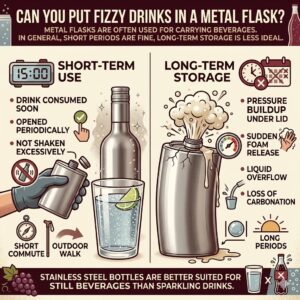
In general, putting a fizzy drink into a metal flask for short periods is usually fine, especially if the drink will be consumed soon.
However, long-term storage is less ideal.
Short-Term Use
Using a stainless steel bottle for carbonated drinks can be reasonable when:
- The drink will be consumed within a short time
- The bottle is opened periodically
- The container is not shaken excessively
For example, carrying sparkling water during a short commute or outdoor walk is typically not a problem.
Long-Term Storage
Problems are more likely when carbonated beverages are stored for long periods.
Potential issues include:
- Pressure buildup under the lid
- Sudden foam release when opened
- Liquid overflow
- Loss of carbonation
Because of these factors, stainless steel bottles are generally better suited for still beverages rather than sparkling drinks.
What Not to Put in a Stainless Steel Bottle
Although stainless steel is extremely durable, some substances are not ideal for long-term storage.
Examples include:
- Highly carbonated beverages (long-term sealed storage)
- Strong bleach or chlorine solutions
- Highly concentrated acids
- Salt-heavy brine solutions
- Fermenting liquids
These substances can create pressure, chemical stress, or unpleasant odors inside the bottle.
Stainless Steel Bottle vs Soda Bottle
To understand why soda behaves differently in a stainless steel bottle, it helps to compare it with standard soda bottles.
| Özellik | Stainless Steel Bottle | Soda Bottle |
| Pressure tolerance | Ilıman | Very high |
| Designed for carbonation | HAYIR | Evet |
| Carbonation retention | Ilıman | Excellent |
| Long-term soda storage | Not ideal | Ideal |
| Lid design | Screw-top seal | Pressure-resistant cap |
Plastic soda bottles are engineered to safely handle internal gas pressure. Stainless steel bottles are designed primarily for temperature insulation rather than carbonation pressure management.
Tips for Using Stainless Steel Bottles with Fizzy Drinks
If you decide to use a stainless steel bottle for sparkling beverages, a few practical habits can reduce potential problems.
Helpful tips include:
- Avoid filling the bottle completely to the top
- Open the lid slowly to release pressure gradually
- Avoid shaking the bottle after filling it
- Consume the beverage within a short time
- Store the bottle in a cool environment
These simple practices can help minimize pressure buildup and reduce the chance of spills.
Final Verdict
Stainless steel bottles are durable, corrosion-resistant, and widely used for beverages. Carbonated drinks such as soda or sparkling water do not chemically damage stainless steel.
However, the real issue with fizzy drinks is pressure buildup caused by carbon dioxide gas. When carbonated beverages are stored in tightly sealed stainless steel bottles, gas accumulation can lead to foam, overflow, or sudden pressure release when the lid is opened.
For short-term use, carrying fizzy drinks in a stainless steel bottle is generally acceptable. For longer storage or transport, containers specifically designed for carbonation—such as original soda bottles—are a better option.
FAQ
Can soda damage stainless steel bottles? No. Soda is mildly acidic but does not typically corrode food-grade stainless steel.
Why do carbonated drinks spray when opened? Carbon dioxide gas builds up inside sealed containers, and opening the lid releases that pressure quickly.
Can you put sparkling water in a stainless steel tumbler? Yes, but it is best consumed soon after filling the bottle to avoid pressure buildup.
Why do some insulated bottle brands warn against carbonation? Because tightly sealed insulated bottles trap gas pressure, which may cause sudden foam release when opened.