Are Stainless Steel Bottles Better Than Plastic? A Health, Safety, and Long-Term Use Analysis
Reusable water bottles have become part of everyday life, but choosing the right material is no longer just about convenience or design. For many people, the real concern is long-term health: are stainless steel bottles better than plastic, especially for daily drinking water?
Plastic bottles are lightweight and inexpensive, while stainless steel bottles are often marketed as safer and more durable. However, the differences between these materials go beyond surface-level claims. They involve chemical stability, aging behavior, hygiene, and how people actually use their bottles over time.
This article examines stainless steel and plastic water bottles from a material safety and daily-use perspective. Rather than promoting fear or making absolute claims, it explains what is known, what is often misunderstood, and how to make a practical, health-conscious choice.
Key Takeaways
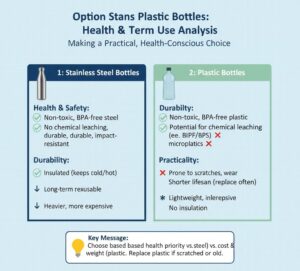
- Food-grade stainless steel is widely regarded as safe for drinking water
- Plastic bottles vary significantly in quality and durability
- Long-term use and aging matter more than material labels alone
- Stainless steel bottles last longer and tolerate repeated use better
- The healthiest bottle is one that remains stable, clean, and consistently used
What Is the Healthiest Material for a Water Bottle?
When people ask about the “healthiest” water bottle material, they are usually trying to avoid two things: chemical exposure Ve long-term uncertainty.
A healthy water bottle material should:
- Remain chemically stable over time
- Not release substances into water under normal conditions
- Tolerate temperature changes
- Be easy to clean and reuse safely
Health is not determined by one-time use. It is shaped by daily repetition, wear, and maintenance habits.
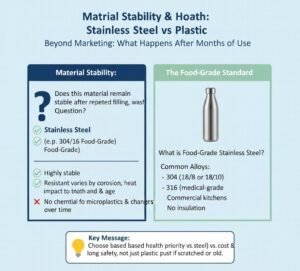
Why Material Stability Matters More Than Marketing Claims
Many bottles are marketed as “BPA içermez” or “eco-friendly,” but these labels do not fully describe how a material behaves after months or years of use.
From a health perspective, the key question is:
Does this material remain stable after repeated filling, washing, temperature changes, and physical wear?
This is where stainless steel and plastic diverge most clearly.
Is It Healthy to Drink Water From a Stainless Steel Bottle?
What Is Food-Grade Stainless Steel?
Stainless steel used in drinkware is not generic metal. Reputable bottles are typically made from food-grade stainless steel, such as:
- 304 paslanmaz çelik (18/8 or 18/10)
- 316 stainless steel (less common, higher corrosion resistance)
These alloys are widely used in:
- Food processing equipment
- Medical instruments
- Commercial kitchens
Their widespread use is based on long-term performance in contact with food and liquids.
Does Stainless Steel Leach Into Water?
Under normal conditions, food-grade stainless steel is highly resistant to corrosion and chemical leaching.
Key characteristics include:
- A passive chromium oxide layer that protects the metal
- Stability across a wide temperature range
- Resistance to neutral and mildly acidic liquids
This does not mean stainless steel is indestructible, but it does mean that properly manufactured stainless steel bottles are considered safe for daily water consumption.
Temperature and Usage Boundaries
Stainless steel bottles are commonly used for:
- Cold water
- Hot beverages
- Repeated daily refills
Extreme misuse—such as storing highly acidic liquids for extended periods or using damaged bottles—can affect any material. However, within normal use, stainless steel remains one of the most stable options available.
Are Stainless Steel Bottles Better Than Plastic?
To answer this fairly, it helps to compare the two materials across several dimensions.
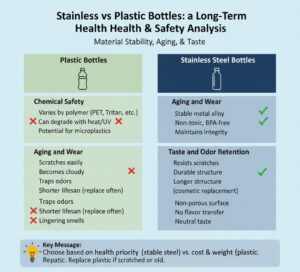
Chemical Safety Comparison
Plastic bottles
- Often marketed as BPA-free
- Can degrade over time due to heat, UV exposure, and wear
Paslanmaz çelik şişeler
- Made from stable metal alloys
- Do not rely on plasticizers
- Maintain structure and integrity over long periods
While many modern plastics are considered safe for food use, their long-term behavior under repeated stress is more variable than stainless steel.
Aging and Wear Over Time
One of the most important differences is how the materials age.
Plastic bottles:
- Scratch more easily
- Can develop cloudy surfaces
- May trap odors and residues
- Often need replacement after visible wear
Stainless steel bottles:
- Resist scratching and deformation
- Maintain structural integrity
- Are typically replaced due to cosmetic damage, not safety concerns
From a long-term health perspective, durability reduces uncertainty.
Taste and Odor Retention
Plastic is slightly porous at a microscopic level. Over time, it can:
- Absorb flavors
- Retain odors
- Develop lingering smells
Stainless steel is non-porous and generally:
- Does not absorb flavors
- Cleans more thoroughly
- Maintains neutral taste with proper care
Taste does not directly determine safety, but it strongly influences whether people continue using a bottle.
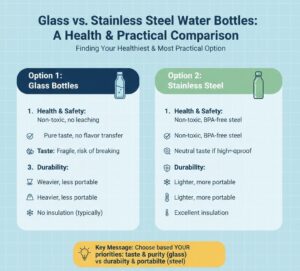
What Are the Disadvantages of Stainless Steel Water Bottles?
No material is perfect. Stainless steel has limitations that should be acknowledged.
Higher Initial Cost
Stainless steel bottles usually cost more than plastic alternatives. However, this cost often reflects:
- Longer lifespan
- Better insulation options
- Higher material durability
Over time, fewer replacements may offset the higher upfront price.
Weight Compared to Plastic
Stainless steel is heavier than plastic. While the difference is modest, it may matter for:
- Ultralight travel
- Children
- Long-distance carrying
For some users, this can affect convenience.
Opaque Interior
Unlike transparent plastic or glass, stainless steel bottles do not allow visual inspection of the interior. This makes:
- Regular cleaning habits more important
- Attention to odors or residue necessary
This is a maintenance consideration rather than a safety flaw.
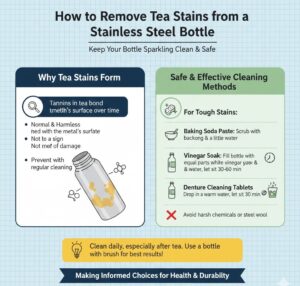
Requires Proper Cleaning
Stainless steel bottles can retain odors if:
- Used for flavored drinks
- Not cleaned thoroughly
- Seals and lids trap residue
However, these issues are usually manageable with regular cleaning.
Which Metal Is Healthiest for Drinking Water?
Stainless steel is not the only metal used in drinkware, but it is the most widely accepted.
Common Metals in Drink Containers
- Stainless steel: Food-grade, stable, widely regulated
- Aluminum: Typically requires internal coatings
- Copper: Traditional use, but requires careful handling
Among these, stainless steel is the most commonly recommended for daily water consumption due to its balance of stability, durability, and regulatory acceptance.
Why Stainless Steel Is Widely Preferred
Stainless steel offers:
- Long-term structural stability
- Resistance to corrosion
- Compatibility with hot and cold liquids
- Minimal maintenance risk
This is why it is used across food, medical, and industrial contexts.
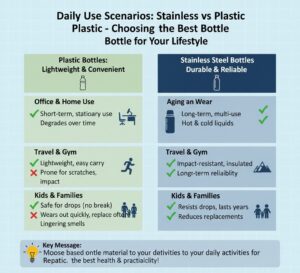
Daily Use Scenarios: Stainless Steel vs Plastic
The healthiest choice often depends on how the bottle is used.
For Office and Home Use
Plastic bottles may be sufficient for short-term or stationary use. Stainless steel offers greater peace of mind for people who:
- Refill frequently
- Want one bottle for many years
- Use hot or cold drinks interchangeably
For Travel, Gym, and Outdoor Activities
Stainless steel excels in:
- Impact resistance
- Temperature retention
- Long-term reliability
Plastic bottles may deform or degrade faster under these conditions.
For Kids and Families
Plastic bottles are lighter but wear quickly. Stainless steel bottles:
- Resist drops
- Last longer
- Reduce replacement frequency
Safety often improves when bottles do not need frequent replacement.
Maintenance and Hygiene Considerations
Hygiene plays a major role in health, regardless of material.
Cleaning Plastic Bottles
Plastic bottles:
- Scratch more easily
- Can trap bacteria in worn surfaces
- Often require replacement once damage appears
Frequent replacement is part of maintaining hygiene with plastic.
Cleaning Stainless Steel Bottles
Stainless steel bottles:
- Tolerate thorough cleaning
- Handle hot water well
- Are less affected by surface wear
With basic care, they can remain hygienic for years.
Environmental and Sustainability Perspective
Health and sustainability often overlap.
Plastic bottles:
- Shorter lifespan
- Higher replacement rate
- Recycling challenges depending on type
Stainless steel bottles:
- Longer usable life
- Fewer replacements
- Higher reuse potential
A bottle used for many years typically has a lower overall environmental footprint.
Final Verdict: Are Stainless Steel Bottles Better Than Plastic?
From a health and long-term use perspective, stainless steel bottles are generally the better option for most people. They offer greater stability, durability, and confidence over extended use.
Plastic bottles are not inherently unsafe, but they are more sensitive to aging, wear, and replacement cycles. For people seeking a long-lasting, low-uncertainty solution for daily hydration, stainless steel provides clear advantages.
Frequently Asked Questions
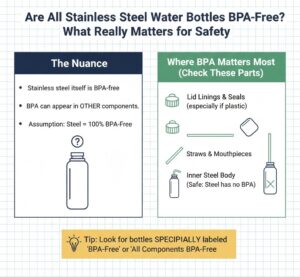
Are stainless steel bottles really BPA-free?
Yes. Stainless steel does not rely on BPA or plasticizers.
Can plastic bottles be safe if they are BPA-free?
Many BPA-free plastics are considered safe, but long-term wear and replacement remain important considerations.
Is stainless steel safe for hot water?
Food-grade stainless steel is commonly used for hot beverages and is considered stable under normal conditions.
How long do stainless steel bottles last?
With proper care, stainless steel bottles can last many years, often far longer than plastic alternatives.
Final Thought
The healthiest water bottle is not just about material—it is about stability over time. A bottle that remains intact, clean, and consistently used supports better hydration habits and reduces long-term uncertainty. For many users, stainless steel offers the most reliable balance between safety and practicality.