Can You Microwave Yeti Cups? Safety, Materials, and What You Should Know
Yeti cups and tumblers are widely known for their durability and excellent insulation. Many people use them for coffee, tea, water, and other beverages during travel, work, or outdoor activities. Because these cups keep drinks hot for long periods, users often wonder whether they can reheat beverages directly in them.
This leads to common questions such as:
- Can you microwave Yeti cups?
- Can you heat water in a Yeti tumbler?
- Can I microwave a stainless steel cup?
- Are Yeti containers microwave safe?
The simple answer is that most Yeti cups should not be placed in a microwave. The majority of Yeti drinkware products are made from stainless steel with vacuum insulation, and metal containers are generally unsafe for microwave heating.
However, the reason behind this recommendation is not always obvious. Understanding how microwaves interact with metal and how insulated drinkware is constructed helps explain why heating a Yeti cup in the microwave is not recommended.

Key Takeaways
- Most Yeti cups are made from stainless steel and should not be microwaved.
- Metal reflects microwave radiation and may cause sparks or appliance damage.
- You can safely drink hot beverages from a Yeti cup after heating them separately.
- Ceramic mugs are generally microwave safe, while insulated metal tumblers are not.
- Always check manufacturer instructions before microwaving any container.
What Are Yeti Cups Made Of?
Most Yeti drinkware products are made from food-grade stainless steel, typically 18/8 stainless steel. This material is widely used in high-quality drinkware because it is durable, corrosion-resistant, and capable of maintaining temperature for extended periods.
Yeti cups often feature a double-wall vacuum insulation design. This means the cup contains two layers of stainless steel separated by a vacuum layer.
This design provides several advantages:
- Excellent heat retention
- Reduced condensation on the exterior
- Long-lasting durability
- Resistance to rust and corrosion
However, the same construction that makes these cups effective for temperature control also makes them unsuitable for microwave use.
Can You Microwave a Stainless Steel Cup?
The main reason you should not microwave a stainless steel cup is related to how microwave ovens work.
Why Metal Should Not Go in a Microwave
Microwave ovens heat food by emitting electromagnetic waves that excite water molecules. These waves cause water molecules to vibrate, generating heat.
Metal behaves differently in a microwave environment. Instead of absorbing microwave energy, metal surfaces tend to reflect microwave radiation.
When a metal object such as a stainless steel cup is placed in a microwave, several problems may occur:
- The metal reflects microwave energy back toward the appliance
- Electrical arcs or sparks may occur
- Heat distribution becomes uneven
- The microwave oven itself may be damaged
In some cases, sharp metal edges can cause arcing, which appears as sparks inside the microwave.
What Happens If You Microwave Stainless Steel
If a stainless steel container is placed inside a microwave, the following outcomes are possible:
- Sparks may appear around metal edges
- The microwave’s internal components may be stressed
- The beverage may not heat evenly
- The appliance could be damaged
While modern microwaves include safety mechanisms, repeatedly microwaving metal objects is not recommended.
Can You Heat Water in a Yeti Cup?
A common misunderstanding is that because Yeti cups hold hot drinks, they can also be used to heat liquids directly in the microwave.
In reality, Yeti cups are designed to retain heat, not generate it.
You can absolutely drink hot water, coffee, or tea from a Yeti tumbler. However, the proper method is to heat the liquid separately first, then pour it into the cup.
For example, you can:
- Boil water using a kettle
- Heat a beverage in a microwave-safe container
- Transfer the hot liquid into the Yeti cup afterward
Once the hot beverage is inside the insulated tumbler, the cup will maintain the temperature much longer than a regular mug.
Can You Microwave Yeti Containers?
Yeti produces a range of drinkware products, including:
- Rambler tumblers
- Stainless steel water bottles
- Insulated travel mugs
- Food containers
Most of these products use stainless steel construction, which means they should not be placed inside a microwave.
Even if the lid or cap contains plastic components, the internal metal body still makes the product unsuitable for microwave heating.
Manufacturers generally advise users to avoid microwaving stainless steel containers in order to prevent appliance damage and potential safety risks.
Is Yeti Ceramic Microwave Safe?
Some Yeti drinkware products include ceramic-lined or ceramic mugs, which may be microwave compatible depending on their design.
Ceramic materials usually allow microwave energy to pass through safely. Because of this, many ceramic mugs and bowls are microwave safe.
However, whether a specific Yeti ceramic product can be microwaved depends on the manufacturer’s design and instructions.
Before placing any drinkware in the microwave, it is best to:
- Check the product description
- Review the manufacturer’s guidelines
- Look for microwave-safe labeling
If the mug includes stainless steel components or insulation layers, it should still be kept out of the microwave.
Why Insulated Tumblers Should Not Go in Microwaves
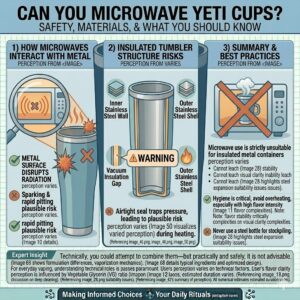
Vacuum-insulated tumblers are built differently from standard mugs. Their structure includes multiple layers designed to block heat transfer.
The typical construction of an insulated tumbler includes:
- Inner stainless steel wall
- Vacuum insulation gap
- Outer stainless steel shell
This sealed structure improves thermal retention but also creates complications when placed in a microwave.
Microwaves rely on water molecules inside food or liquid to absorb energy. However, metal surfaces disrupt microwave radiation and prevent proper heating.
Because of this, insulated metal tumblers are unsuitable for microwave heating.

Stainless Steel vs Ceramic Cups for Microwaving
Different drinkware materials behave differently in microwave environments.
| Материал | Microwave Safe | Heat Retention | Бат бөх чанар |
| Stainless steel | Үгүй | Excellent | Very high |
| Ceramic | Usually yes | Дунд зэрэг | Дунд зэрэг |
| Glass | Тиймээ | Дунд зэрэг | Дунд зэрэг |
| Plastic (microwave-safe) | Тиймээ | Low | Дунд зэрэг |
Stainless steel cups excel at keeping beverages hot or cold but should not be used in microwaves. Ceramic and glass mugs are generally safer for microwave heating.
Safe Ways to Heat Drinks for a Yeti Cup
If you want to enjoy a hot beverage in a Yeti tumbler, the safest approach is to heat the drink separately.
Recommended methods include:
- Heating water with an electric kettle
- Microwaving beverages in a ceramic mug
- Boiling water on the stove
- Pouring hot liquid into the Yeti cup afterward
This process allows you to benefit from the insulation properties of the cup without exposing it to microwave energy.
What Containers Are Microwave Safe?
Many containers are designed specifically for microwave heating.
Common microwave-safe options include:
- Ceramic mugs
- Glass cups and bowls
- Microwave-safe plastic containers
- Heat-resistant glassware
These materials allow microwave radiation to pass through them safely, heating the liquid inside rather than reflecting energy.
Final Verdict
Yeti cups are designed to maintain beverage temperature through stainless steel construction and vacuum insulation. While these features make them excellent for keeping drinks hot or cold, they also make them unsuitable for microwave use.
Stainless steel reflects microwave radiation and may cause sparks or uneven heating inside the appliance. For this reason, most Yeti cups and containers should never be placed in a microwave.
If you need to heat a beverage, the safest method is to warm it in a microwave-safe container first and then pour it into the Yeti cup. This allows you to enjoy the benefits of insulated drinkware while avoiding potential safety risks.
FAQ
Can you microwave a stainless steel tumbler? No. Stainless steel reflects microwave energy and may cause sparks or uneven heating.
Can you heat water in a Yeti cup? You can pour hot water into a Yeti cup, but the water should be heated separately before transferring it.
Are insulated mugs microwave safe? Most insulated metal mugs are not microwave safe because they contain stainless steel layers.
Why does metal spark in a microwave? Metal surfaces reflect microwave radiation, which can cause electrical arcs or sparks inside the appliance.