Can You Put Electrolytes in a Stainless Steel Bottle? Safety, Reactions, and What to Avoid
Electrolyte powders and sports drink mixes are popular for hydration, especially during workouts, travel, and hot weather. But many people wonder:
- Can I put electrolyte powder in a stainless steel water bottle?
- Do electrolytes react with metal?
- What can you not put in a stainless steel bottle?
- Is it safe to leave sports drinks in a stainless steel tumbler overnight?
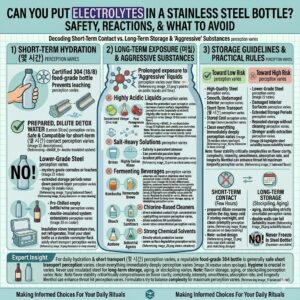
The short answer is: Yes, you can mix electrolytes in a food-grade stainless steel bottle for short-term use. However, long-term storage—especially with high-salt or highly acidic formulas—is not ideal.
To understand why, we need to look at what electrolytes contain and how stainless steel behaves.
Key Takeaways
- Electrolytes contain salts and acids.
- Short-term use in stainless steel is safe.
- Long-term salt exposure can stress the metal surface.
- Cleaning after use is essential.
- 304 and 316 stainless steel are safest choices.
What Are Electrolytes Made Of?
Electrolyte drinks and powders typically contain a mix of:
- Sodium (often as sodium chloride)
- Potassium
- Magnesium
- Calcium
- Flavorings and sweeteners
Two components matter most when discussing stainless steel safety:
- Salt (chlorides)
- Acidity (low pH)
Sports drinks and electrolyte mixes often have a pH between 3 and 4. That makes them mildly acidic—similar to orange juice.
Salt and acid together are the main factors that can potentially affect metal surfaces over time.
Do Electrolytes React with Stainless Steel? (Detailed, Practical + “Why”)
In everyday use, electrolyte drinks do not meaningfully “react” with high-quality food-grade stainless steel in a way that creates an immediate safety problem. What people are really worried about is corrosion—especially whether salty mixes can “damage” the bottle or cause metallic taste.
To answer that properly, you need to understand what stainless steel is protecting itself against, and when that protection can fail.
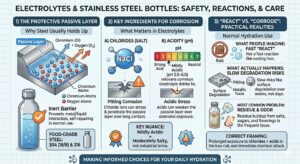
1) Why Stainless Steel Usually Holds Up: The Passive Chromium Oxide Layer
Food-grade stainless steel (commonly 304/18-8 and sometimes 316) is corrosion-resistant because it naturally forms a microscopic protective film called a passive layer.
- Chromium in the alloy reacts with oxygen in the air
- This forms a thin, stable chromium oxide layer
- That layer separates the liquid from the underlying metal
As long as the passive layer remains intact and can “self-repair” (it often can in normal conditions), the metal beneath doesn’t interact much with the drink.
Practical meaning: If your bottle is a reputable 304 or 316 stainless steel bottle with a smooth interior and you use electrolyte drinks for a few hours (gym, commute), corrosion risk is extremely low.
2) What Electrolytes Actually Contain (and What Matters for Corrosion)
Electrolyte powders typically include:
- Sodium (often sodium chloride) → introduces chloride ions
- Potassium, magnesium, calcium salts
- Often citric acid (and flavor acids) → lowers pH
- Sweeteners/flavor compounds
From a corrosion standpoint, two variables matter most:
A) Chlorides (salt)
Chloride ions are well-known for their role in pitting corrosion in stainless steel—but only under certain conditions.
B) Acidity (pH)
Acids can stress the passive layer over long exposure. However, mild food acids at typical drink concentrations are generally compatible with 304/316 in short contact times.
The important nuance: Electrolyte drinks are usually mildly acidic + moderately salty, not industrial-strength brine or acid.
3) “Do Electrolytes React With Metal?” vs “Can They Cause Corrosion?”
People use “react” loosely. In normal hydration use:
- You’re not seeing a fast chemical reaction like rusting iron.
- You’re mostly dealing with slow surface degradation risks (if any).
- The most common “problem” is not corrosion—it’s residue buildup and odor retention from salts + flavorings.
So the correct framing is:
Electrolytes generally don’t chemically attack quality stainless steel quickly, but prolonged exposure to chlorides + acid + heat can increase corrosion risk over time—especially in damaged bottles.
4) When Could a Reaction (Corrosion) Actually Occur?
Here are the real-world conditions that increase risk, explained in practical terms.
1) Long contact time (the biggest factor)
If you regularly leave electrolyte mix sitting in the bottle for:
- overnight, repeatedly
- 24–72 hours
- multiple days in a row
you are giving chlorides and acids more time to challenge the passive layer, especially in crevices and under residue films.
Short-term use (hours) is very different from long-term storage (days).
2) Heat + time (compounding effect)
Heat accelerates chemical processes and also makes liquids thinner, allowing them to penetrate micro-gaps.
Leaving electrolyte mix in:
- a hot car
- direct sunlight
- warm gym bag
for long periods raises the chance of:
- taste changes
- seal wear
- surface stress
3) Scratches, pitting, or worn interior finish (hot spots for corrosion)
A smooth stainless surface resists corrosion better than a scratched one.
Scratches matter because:
- They disrupt the passive layer locally
- They create micro “valleys” where salts concentrate
- They can trap residues that stay wet longer
If a bottle has visible interior wear, it’s more sensitive to salty/acidic liquids.
4) High chloride concentration (rare, but possible)
Most standard electrolyte powders are not extreme, but some mixes (or DIY recipes) can be heavily salted.
Chloride-driven pitting is more likely when:
- salt concentration is high
- liquid is left sitting
- the bottle isn’t rinsed
- The temperature is warm
5) Poor-quality or unverified steel / inconsistent manufacturing
Not all “stainless steel” products are truly food-grade 304/316.
Low-quality bottles may have:
- inconsistent alloy composition
- rough interior finishing
- weld areas with weaker corrosion resistance
These products are more likely to develop:
- metallic taste
- staining
- localized rust spotting
5) What Would You Notice If Your Bottle Was Being Affected?
Corrosion in stainless steel bottles is usually not dramatic at first. Watch for:
- Persistent metallic taste specifically when using salty/acidic mixes
- Tiny rust-colored pinpoints (early pitting signs)
- Interior discoloration that doesn’t wash off
- A rough patch you can feel after cleaning
Most users won’t see corrosion. The most common “issue” is simply salty residue and smell—especially in lids and gaskets.
6) 304 vs 316: Does It Matter for Electrolytes?
For normal electrolyte use:
- 304 is generally sufficient
- 316 offers extra corrosion resistance, especially in chloride-rich environments
If your users frequently do:
- long hikes
- daily electrolyte use
- leaving drinks in bottles longer than ideal then recommending 316 (or at least high-quality 304 with good interior polish) makes sense.
7) Best Practices to Reduce Any Risk (Simple, Repeatable Habits)
If you want the safest, lowest-risk routine:
- Mix electrolytes and drink within the day
- Rinse promptly after finishing (even just water rinse helps)
- Wash daily with mild detergent
- Dry bottle and lid fully (moisture trapped under seals is a common issue)
- Avoid leaving electrolyte mix in a warm car
- If you store overnight occasionally, do it refrigerated and clean in the morning
Can I Put Electrolyte Powder in a Stainless Steel Water Bottle?
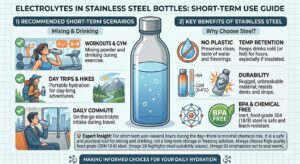
Short-Term Use (Recommended Scenario)
Using a stainless steel bottle for:
- Mixing electrolyte powder
- Drinking during workouts
- Day trips
- Commuting
is generally safe.
Benefits include:
- No plastic taste
- Good temperature retention (if insulated)
- Бат бөх чанар
- Үгүй BPA concerns
For short-term use—several hours during the day—there is minimal chemical risk.
Long-Term Storage (Not Recommended)
Leaving electrolyte drinks in a steel bottle:
- Overnight regularly
- For multiple days
- In hot environments
is not ideal.
Why?
- Salt can leave residue
- Acid can slowly stress the protective oxide layer
- Flavorings can cling to the interior
- Odor retention increases
While immediate damage is unlikely, repeated long-term exposure may gradually reduce the bottle’s internal surface integrity.
What Can You Not Put in a Stainless Steel Bottle?
Stainless steel is durable, but some substances are not ideal for long-term storage:
- Vinegar (high acidity)
- Lemon juice concentrates (very acidic)
- Brine or salt-heavy solutions
- Fermenting liquids
- Bleach or chlorine-based cleaners
- Highly carbonated drinks (pressure build-up risk)
Electrolytes fall into the “mildly acidic + salty” category, which is acceptable short-term but not best for extended storage.
What Not to Put in a Stainless Steel Tumbler?
In addition to high-salt electrolyte drinks left too long, avoid:
- Milk (if not cleaned immediately)
- Kombucha (fermentation + acidity)
- Strongly colored beverages without cleaning
- Alcohol stored long-term
- Citrus-heavy drinks sitting for days
Most issues arise not from immediate reaction—but from neglecting cleaning.
Does Salt Damage Stainless Steel?
Salt (especially chloride) is one of the main corrosion triggers for stainless steel. That’s why:
- Marine environments require 316 steel
- Road salt can damage exposed metal
However, damage typically occurs under:
- High chloride concentration
- Prolonged contact
- Elevated temperature
- Poor maintenance
Electrolyte drinks contain much lower salt concentration than seawater. Occasional daily use does not pose the same corrosion risk as constant marine exposure.
Still, repeated overnight storage of salty drinks can increase wear over time.
Stainless Steel vs Plastic for Electrolyte Drinks
| Онцлог | Зэвэрдэггүй ган | Plastic Bottle |
| Chemical Stability | Өндөр | Depends on plastic quality |
| Odor Retention | Low | Higher |
| Corrosion Risk | Possible with prolonged salt exposure | None |
| Бат бөх чанар | Маш өндөр | Дунд зэрэг |
| Температурыг хадгалах | Excellent (insulated) | Poor |
Stainless steel is generally superior for durability and insulation. Plastic may avoid corrosion concerns but can retain odor or flavor.
Does Citric Acid React with Stainless Steel?
Citric acid is commonly used in electrolyte mixes.
In moderate concentrations and short exposure:
- Food-grade stainless steel handles citric acid well.
However, prolonged exposure combined with salt may slowly stress the protective surface layer—especially if scratched.
Again, time and cleaning habits matter more than occasional use.
Best Practices for Using Electrolytes in Stainless Steel Bottles
To minimize risk:
- Use only food-grade 304 or 316 stainless steel bottles.
- Rinse thoroughly after each use.
- Wash with warm soapy water daily.
- Avoid storing electrolyte drinks overnight frequently.
- Do not leave bottles in hot cars with electrolyte solution inside.
- Dry completely before storage.
Regular cleaning prevents salt buildup and preserves surface integrity.
Final Verdict
Yes, you can put electrolytes in a stainless steel bottle for short-term daily use. Food-grade stainless steel is resistant to mild acids and salts found in sports drinks.
However:
- Do not store electrolyte drinks for extended periods.
- Avoid leaving salty solutions overnight repeatedly.
- Always rinse and clean after use.
Stainless steel bottles are excellent for hydration—but like any material, proper care ensures longevity.
FAQ
Do electrolytes react with stainless steel? Not significantly during short-term use, but prolonged exposure to salt and acid may increase corrosion risk.
Can I leave sports drink in a stainless steel bottle overnight? Occasionally yes, but repeated overnight storage is not recommended.
Is citric acid safe in stainless steel? Yes, for short contact periods in food-grade steel.
Should I use glass instead? Glass is fully inert but less durable. Stainless steel is practical for daily transport.