How Does a Vacuum Bottle Work? The Science Behind Insulated Bottles
Vacuum bottles, also known as vacuum flasks or thermos bottles, are one of the most practical everyday inventions for keeping drinks hot or cold for long periods. Whether you are carrying hot coffee to work, tea for travel, or cold water during sports, vacuum insulated bottles are designed to maintain the temperature of beverages far better than ordinary containers.
Despite their widespread use, many people still wonder:
- How does a vacuum bottle work?
- What is the point of a vacuum bottle?
- How long do vacuum insulated bottles last?
- What should you not put in a vacuum flask?
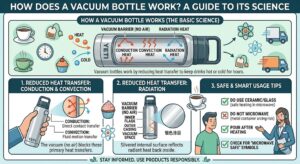
Understanding the science behind vacuum insulation can help explain why these bottles are so effective and how to use them properly. In simple terms, vacuum bottles work by reducing heat transfer, allowing drinks to stay hot or cold for several hours.
What Is a Vacuum Bottle?
A vakuuma pudele is a specially designed container that uses insulation technology to maintain the temperature of liquids inside. These bottles are commonly used for storing beverages such as coffee, tea, water, or soup.
Most modern vacuum bottles are made with double-wall stainless steel construction, which consists of two layers of metal separated by a vacuum space.
The basic structure of a vacuum bottle includes:
| Component | Function |
| Inner wall | Holds the beverage |
| Outer wall | Protects the bottle and provides durability |
| Vacuum insulation layer | Prevents heat transfer |
| Insulated lid | Reduces heat escape through the opening |
The vacuum layer between the walls plays the most important role in insulation. Because there is almost no air inside this space, heat cannot easily move between the inner and outer layers.
This design dramatically slows down temperature changes.
What Is the Point of a Vacuum Bottle?
The main purpose of a vacuum bottle is temperature retention. Unlike regular bottles that quickly lose heat or cold, vacuum bottles are designed to keep beverages at their original temperature for extended periods.
Common reasons people use vacuum bottles include:
- keeping coffee hot during commuting
- maintaining cold water during outdoor activities
- carrying tea or soup for travel
- preserving the temperature of sports drinks
For example, a well-designed vacuum bottle can keep hot drinks warm for 6–12 hours or cold drinks chilled for 12–24 stundas, depending on the product quality and environmental conditions.
This makes vacuum insulated bottles extremely useful for everyday hydration and travel.
How Do Vacuum Bottles Work?
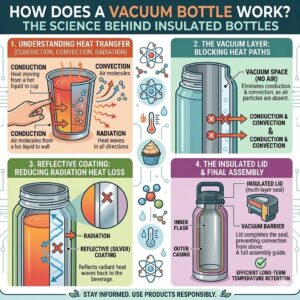
To understand how vacuum bottles work, it is important to understand how heat moves. Heat can transfer in three main ways:
- convection
- radiation
Vacuum bottles are designed to minimize all three types of heat transfer.
Conduction: Heat Transfer Through Materials
Conduction occurs when heat moves through solid materials. For example, when you touch a hot mug, heat travels from the mug into your hand.
In a normal metal container, heat can easily travel from the hot liquid inside through the container walls and into the surrounding air.
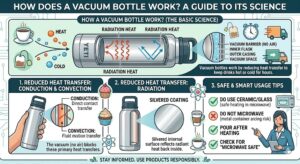
Vacuum bottles reduce conduction because the vacuum layer contains almost no particles. Without particles, heat cannot easily move from the inner wall to the outer wall.
This significantly slows the loss of heat.
Convection: Heat Transfer Through Air Movement
Convection occurs when heat is transferred through moving air or liquid.
In a regular container filled with air between its walls, heat can circulate through the air and escape quickly.
However, vacuum bottles remove almost all the air between the inner and outer walls. Without air molecules, convection cannot occur.
This is why the vacuum layer is so important—it eliminates one of the most common ways heat escapes.
Radiation: Heat Transfer Through Energy Waves
Heat can also transfer through infrared radiation, which is energy emitted from warm surfaces.
Many vacuum bottles include reflective surfaces inside the walls that help reduce heat loss through radiation.
These reflective surfaces bounce heat energy back toward the liquid, helping the bottle maintain its temperature for longer.
Structure of a Vacuum Insulated Bottle
Modern vacuum bottles are carefully engineered to balance durability and insulation.
A typical stainless steel vacuum bottle contains several key components.
| Bottle Part | Purpose |
| Stainless steel inner wall | Holds the liquid |
| Vacuum insulation layer | Prevents heat transfer |
| Stainless steel outer wall | Protects the bottle |
| Insulated lid | Seals heat inside |
Stainless steel is commonly used because it is:
- durable
- safe for beverages
- easy to clean
These properties make stainless steel ideal for insulated drinkware.
Why Vacuum Bottles Keep Drinks Hot or Cold for So Long
The reason vacuum bottles perform so well is that they minimize heat exchange between the inside and outside environment.
Because conduction, convection, and radiation are all reduced, the temperature of the liquid changes much more slowly than it would in a normal container.
For example:
| Bottle Type | Temperatūras saglabāšana |
| Regular plastic bottle | 1–2 hours |
| Single-wall metal bottle | 2–3 hours |
| Vacuum insulated bottle | 6–24 hours |
High-quality vacuum bottles can maintain beverage temperatures for an entire day under typical conditions.
How Long Do Vacuum Insulated Bottles Last?
A good vacuum insulated bottle can last for many years if properly maintained.
Most high-quality bottles have an average lifespan of:
5 to 10 years or more
The lifespan depends on several factors:
- build quality
- vacuum seal integrity
- frequency of use
- proper cleaning and maintenance
If the vacuum seal is damaged, the insulation performance may decrease. This usually happens if the bottle is dropped or dented severely.
When the vacuum seal fails, the bottle may no longer retain heat effectively.
What Should You Not Put in a Vacuum Flask?
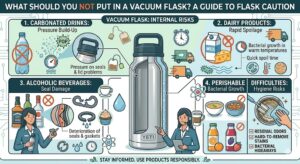
Although vacuum bottles are versatile, certain liquids should be avoided.
Carbonated Drinks
Carbonated beverages can create pressure inside a sealed vacuum flask, which may cause leaks or lid problems.
Dairy Products
Milk or dairy-based drinks can spoil quickly if left inside a bottle for too long, especially at warm temperatures.
Alcoholic Beverages
Alcohol generally does not damage stainless steel, but strong alcohol may affect seals or gaskets over time.
Perishable Liquids
Soups or juices containing fresh ingredients may spoil if left in the bottle for extended periods.
Cleaning the bottle after storing these liquids is also more difficult.
Vacuum Bottle vs Regular Water Bottle
Understanding the difference between vacuum bottles and regular bottles helps explain why insulated bottles are so effective.
| Funkcija | Vakuuma pudele | Regular Bottle |
| Izolācija | Excellent | Minimal |
| Temperature retention | 6–24 hours | 1–2 hours |
| Materiāls | Double-wall stainless steel | Plastic or single-wall metal |
| Usage | Hot and cold drinks | Mainly cold drinks |
Vacuum bottles are designed specifically for thermal insulation, while regular bottles focus mainly on portability.
Tips for Using a Vacuum Bottle Correctly
To maximize the performance of a vacuum bottle, a few simple practices can help.
Preheat or Pre-chill the Bottle
Before adding your beverage, rinse the bottle with hot or cold water depending on the drink. This helps stabilize the internal temperature.
Avoid Overfilling
Leave a small amount of space at the top of the bottle to prevent pressure buildup and ensure proper sealing.
Clean Regularly
Regular cleaning prevents odor buildup and keeps the bottle hygienic.
Warm water and mild soap are usually sufficient.
Avoid Dropping the Bottle
Physical damage can affect the vacuum seal and reduce insulation performance.
Final Verdict
Vacuum bottles work by dramatically reducing heat transfer through a combination of double-wall construction and vacuum insulation. By eliminating air between the inner and outer walls, these bottles prevent heat loss through conduction and convection while minimizing radiation.
This advanced insulation technology allows vacuum bottles to keep drinks hot or cold for many hours, making them an essential tool for everyday hydration, travel, and outdoor activities.
When used properly and maintained well, a high-quality vacuum insulated bottle can provide reliable performance for many years.
Key Takeaways
- Vacuum bottles use double-wall construction with a vacuum layer for insulation.
- The vacuum layer prevents heat transfer through conduction and convection.
- Reflective surfaces help reduce heat loss through radiation.
- Vacuum insulated bottles can keep drinks hot or cold for 6–24 hours.
- Proper care and cleaning can extend the lifespan of vacuum bottles.
FAQ
How do vacuum bottles keep drinks hot? Vacuum bottles reduce heat transfer by eliminating air between two walls, which slows heat loss.
Do vacuum bottles completely stop heat transfer? No container can stop heat transfer completely, but vacuum insulation greatly slows the process.
How long can a vacuum flask keep drinks hot? Many vacuum bottles can keep drinks hot for 6–12 hours and cold for up to 24 hours.
Are stainless steel vacuum bottles better? Stainless steel bottles are durable, corrosion-resistant, and widely used for vacuum insulated drinkware.