Are Stainless Steel Drink Bottles Safe?
A Complete, Science-Based Guide to Health, Safety, and Material Comparisons
Reusable drink bottles have become part of everyday life. From gyms and offices to schools and travel, stainless steel bottles are widely marketed as a healthier and more sustainable alternative to plastic. But as their popularity grows, so do questions about safety.
People often ask: Are stainless steel drink bottles safe? Do they leach metals? Are they truly non-toxic? Are there any disadvantages? And how do they compare with glass or plastic bottles in terms of health?
This article provides a clear, evidence-based overview of stainless steel drink bottle safety, addressing common concerns and explaining what current research and material science tell us.
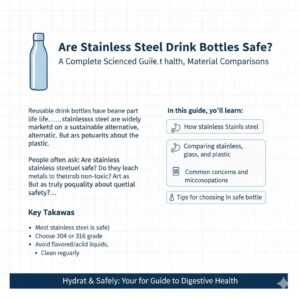
Key Takeaways
- Food-grade stainless steel drink bottles are generally considered safe for daily use
- Stainless steel is non-reactive and does not contain BPA or similar plastic chemicals
- Metal leaching is minimal under normal conditions and well below safety limits
- Disadvantages exist, but they are mostly practical rather than health-related
- Stainless steel and glass are widely viewed as healthier options than plastic
Why People Question the Safety of Stainless Steel Bottles
Concerns about stainless steel bottles usually come from a few understandable sources:
- Awareness of chemical leaching from plastics
- Fear of heavy metals such as nickel or chromium
- Occasional reports of metallic taste
- Confusion between industrial metals and food-grade stainless steel
Because stainless steel is a metal, many people assume it behaves like aluminum or other reactive materials. In reality, food-grade stainless steel behaves very differently, and understanding its composition is key to evaluating safety.
What Is a Stainless Steel Drink Bottle Made Of?
Common Stainless Steel Grades Used in Bottles
Most high-quality stainless steel drink bottles are made from:
- 304 nerūsējošais tērauds (18/8 or 18/10)
- 316 stainless steel (less common, more corrosion-resistant)
These grades are widely used in:
- Food processing equipment
- Medical instruments
- Cookware
- Beverage containers
The numbers (18/8 or 18/10) refer to the percentage of chromium and nickel, which help create corrosion resistance.
Why Food-Grade Stainless Steel Is Considered Safe
Food-grade stainless steel is valued because it is:
- Non-reactive with most foods and beverages
- Resistant to rust and corrosion
- Stable across a wide temperature range
- Smooth and non-porous, reducing bacterial buildup
Unlike plastic, stainless steel does not degrade in the same way over time when exposed to heat or repeated washing.
Is It Safe to Drink from Stainless Steel Water Bottles?
Chemical Safety and Metal Leaching
One of the most common concerns is whether stainless steel bottles release metals into drinking water.
Research shows that:
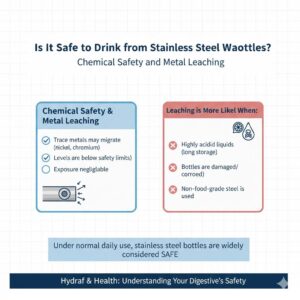
- Trace amounts of nickel or chromium may migrate under extreme conditions
- Migration levels are typically far below international safety thresholds
- For most users, exposure is negligible and considered safe
Leaching is more likely when:
- Highly acidic liquids are stored for long periods
- Bottles are damaged or corroded
- Non-food-grade stainless steel is used
Under normal daily use, stainless steel bottles are widely considered safe.
Taste and Odor Concerns
Some users report a metallic taste, especially with new bottles. This is usually caused by:
- Manufacturing residues
- Incomplete cleaning before first use
- Odors trapped in lids or seals
A thorough wash before use typically eliminates these issues. Persistent metallic taste may indicate a lower-quality product rather than a material problem.
Hot and Cold Beverage Safety
Stainless steel performs well with both hot and cold beverages:
- Does not soften or melt like plastic
- Does not shatter like glass
- Maintains structural integrity at high temperatures
The vacuum insulation layer in insulated bottles does not contact the liquid, so it does not affect safety.
What Are the Disadvantages of Stainless Steel Water Bottles?
While stainless steel bottles are generally safe, they are not perfect.
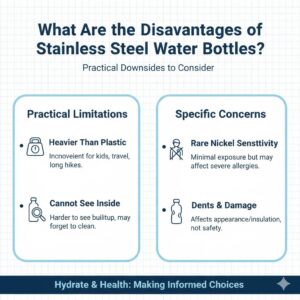
Heavier Than Plastic
Stainless steel bottles weigh more than plastic alternatives, which can be inconvenient for:
- Children
- Ultralight travel
- Long hikes
Cannot See Inside the Bottle
Because stainless steel is opaque:
- It’s harder to see residue or buildup
- Users may forget to clean regularly
This is a hygiene issue rather than a chemical safety concern.
Rare Nickel Sensitivity
A very small number of people are sensitive to nickel. While exposure from bottles is minimal, those with severe nickel allergies may prefer glass.
Dents and Cosmetic Damage
Stainless steel bottles can dent when dropped. While this usually does not affect safety, it can impact appearance or insulation performance.
Is Owala Stainless Steel Non-Toxic?
Owala is a popular bottle brand often mentioned in safety discussions.
Based on publicly available information:
- Owala bottles use food-grade stainless steel
- Plastic components are labeled BPA-free
- No major safety recalls or warnings are associated with the brand
Like most reputable brands, Owala follows common industry safety standards. There is no evidence suggesting that Owala stainless steel bottles are toxic under normal use.
How to Judge Any Brand’s Safety (Not Just Owala)
Regardless of brand, consumers should look for:
- Clear labeling of food-grade stainless steel
- BPA-free plastic components
- Transparent material descriptions
- Proper certifications or compliance statements
Brand reputation matters, but material quality and proper use matter more.
Is It Healthier to Drink Out of Stainless Steel or Glass?
This is one of the most common comparison questions.
Stainless Steel vs Glass vs Plastic (Health Comparison)
| Funkcija | Nerūsējošais tērauds | Glass | Plastmasa |
| Chemical stability | Augsts | Very high | Variable |
| Bez BPA | Jā | Jā | Not always |
| Heat resistance | Augsts | Augsts | Limited |
| Breakage risk | Low | Augsts | Low |
| Svars | Vidējs | Augsts | Low |
| Long-term durability | Augsts | Vidējs | Low |
Nerūsējošais tērauds
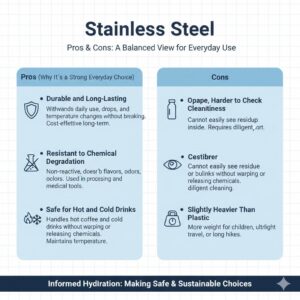
Pros (Why Stainless Steel Is a Strong Everyday Choice)
Durable and long-lasting Stainless steel bottles are designed to withstand daily use, drops, and temperature changes without cracking or breaking. Unlike glass, they rarely fail structurally, and unlike plastic, they do not degrade or weaken over time. A well-made stainless steel bottle can last for many years with minimal performance loss, making it a cost-effective long-term option.
Resistant to chemical degradation Food-grade stainless steel is non-reactive under normal conditions. It does not absorb flavors, odors, or colors, and it does not break down when exposed to heat, sunlight, or repeated washing. This stability is one of the main reasons stainless steel is widely used in food processing, medical tools, and commercial kitchens.
Safe for hot and cold drinks Stainless steel handles both hot and cold beverages safely. It does not soften, warp, or release chemicals when filled with hot liquids like coffee or tea, and it performs equally well with cold or iced drinks. Insulated stainless steel bottles also maintain temperature effectively without direct contact between insulation materials and the beverage.
Cons
- Opaque, making it harder to visually check cleanliness
- Slightly heavier than plastic alternatives
Glass
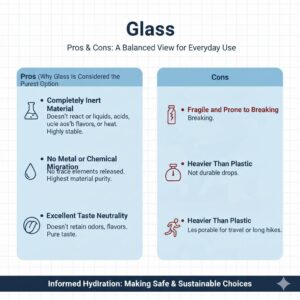
Pros (Why Glass Is Considered the Purest Option)
Completely inert material Glass is chemically inert, meaning it does not react with liquids under any normal drinking conditions. It does not interact with acids, heat, or flavor compounds, which makes it one of the most stable materials for food and beverage storage.
No metal or chemical migration Unlike metals or plastics, glass does not release trace elements into liquids. This makes it especially appealing to users who want the highest level of material purity, such as people with chemical sensitivities or those who prioritize taste accuracy.
Excellent taste neutrality Glass does not retain odors or flavors, even after repeated use with strong beverages. This makes it ideal for people who frequently switch between water, tea, coffee, or flavored drinks and want each beverage to taste exactly as intended.
Cons
- Fragile and prone to breaking
- Heavier than plastic
- Less practical for travel, sports, or children
Plastmasa
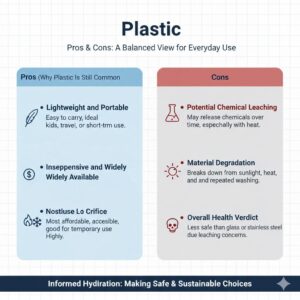
Pros (Why Plastic Is Still Common)
Lightweight and portable Plastic bottles are easy to carry and are often chosen for convenience, especially for children, travel, or short-term use. Their low weight makes them less tiring to transport compared to glass or stainless steel.
Inexpensive and widely available Plastic bottles are generally the most affordable option and are widely accessible. This makes them appealing for temporary use, large group events, or situations where loss or damage is likely.
Cons
- Potential chemical leaching over time, especially with heat or wear
- Material degradation from sunlight, heat, and repeated washing
Overall Health Verdict
From a health perspective:
- Glass and stainless steel are generally considered safer than plastic
- Stainless steel offers the best balance between safety and practicality for daily use
Are Stainless Steel Bottles Safe for Long-Term Daily Use?
For most people, yes.
Stainless steel:
- Does not degrade like plastic
- Maintains structural stability for years
- Is widely used in food and medical industries
Long-term safety depends more on maintenance and proper use than the material itself.
How to Use Stainless Steel Bottles Safely (Best Practices)
To maximize safety and hygiene:
- Wash thoroughly before first use
- Clean regularly, especially after coffee or dairy drinks
- Disassemble and clean lids and seals
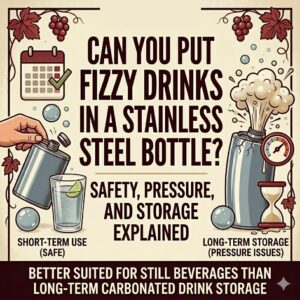
- Avoid storing acidic liquids for extended periods
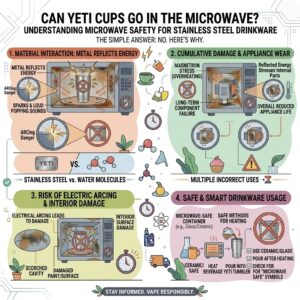
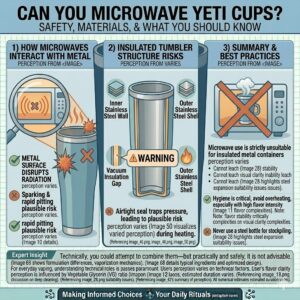
- Do not microwave stainless steel bottles
- Replace worn seals when needed
These habits reduce odor buildup and ensure long-term usability.
Common Myths About Stainless Steel Bottles
“Stainless steel always leaches metals” Metal migration is minimal and well below safety limits under normal use.
“Hot drinks make stainless steel dangerous” Stainless steel handles heat far better than plastic.
“Stainless steel is less safe than plastic” Scientific consensus generally suggests the opposite.
Final Thoughts: Are Stainless Steel Drink Bottles Safe?
Based on current evidence and material science, food-grade stainless steel drink bottles are considered safe for everyday use.
They offer:
- Chemical stability
- Izturība
- Resistance to heat and corrosion
While no material is perfect, stainless steel remains one of the most reliable choices for reusable drink containers when properly manufactured and maintained.
FAQ
Are stainless steel bottles safe for kids? Yes, when made from food-grade materials and used properly.
Can stainless steel leach chemicals into water? Trace metal migration is possible but extremely low and considered safe.
Is stainless steel safer than plastic bottles? In most cases, yes—especially for long-term and hot beverage use.
Can I put coffee or tea in a stainless steel bottle? Yes, but regular cleaning is recommended to prevent odor buildup.
How often should I replace a stainless steel bottle? Only if it becomes severely damaged or impossible to clean.