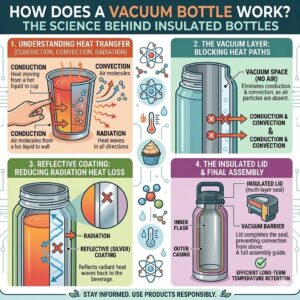
Is There a Clear Insulated Water Bottle?
מָבוֹא
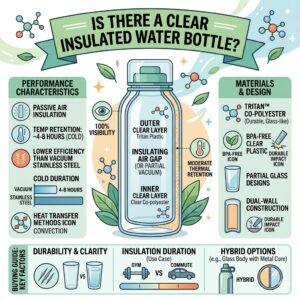
Many consumers prefer clear water bottles because they allow you to see exactly what you’re drinking—whether it’s plain water, infused beverages, or supplements. Transparency also makes it easier to monitor cleanliness, which is especially important for daily use.
At the same time, modern users expect insulation performance, meaning bottles that can keep drinks cold for hours or maintain hot temperatures throughout the day.
This raises an important question: Is there a clear insulated water bottle that offers both visibility and strong temperature retention?
The answer is yes—but with important trade-offs.
In this guide, we’ll explain:
- how clear insulated bottles are designed
- the materials used and how they affect performance
- real-world advantages and limitations
- how to choose the best option based on your needs
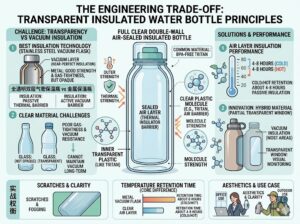
What Makes a Bottle “Clear” and Insulated
Clear Materials and Visibility Advantages
Clear bottles are typically made from materials such as:
- Tritan™ copolyester (ללא BPA plastic)
- Glass (borosilicate or soda-lime glass)
- Transparent polypropylene blends
These materials provide high transparency, allowing users to:
- easily monitor liquid levels
- detect residue or contamination
- track hydration intake
From a usability standpoint, this visibility is especially valuable in fitness, office, and health-conscious environments.
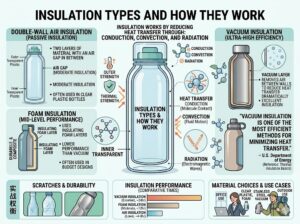
Insulation Types and How They Work
Insulation works by reducing heat transfer through conduction, convection, and radiation.
The most common insulation types include:
Double-wall air insulation
Two layers of material with an air gap in between.
- Moderate insulation
- Often used in clear plastic bottles
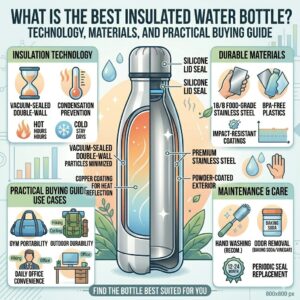
Vacuum insulation (double-wall vacuum)
Removes air between walls to reduce heat transfer dramatically.
- Excellent insulation
- Typically used in stainless steel bottles
According to the U.S. Department of Energy, vacuum insulation is one of the most efficient methods for minimizing heat transfer. (Reference: U.S. Department of Energy – Thermal Insulation Basics)
Foam insulation
Uses insulating foam layers
- Lower performance than vacuum
- Often used in budget designs
Trade-Offs Between Clarity and Performance
Here’s the key challenge:
The best insulation (vacuum stainless steel) is not transparent.
This creates a fundamental trade-off:
| תכונה | Clear Bottles | Vacuum Steel Bottles |
| רְאוּת | Excellent | None |
| בִּדוּד | לְמַתֵן | Excellent |
| עֲמִידוּת | בֵּינוֹנִי | גָבוֹהַ |
In our experience testing different bottle designs, fully clear bottles rarely achieve the same thermal performance as stainless steel vacuum bottles.
Benefits of Using a Clear Insulated Bottle
Temperature Retention and Beverage Safety
While not as powerful as vacuum insulation, many clear bottles still provide adequate short-term temperature control, typically:
- 2–6 hours for cold beverages
- limited heat retention for hot liquids
This makes them suitable for daily hydration rather than extreme temperature control.
Content Visibility and Cleanliness
One of the biggest advantages is visibility.
Users can:
- see how much water they’ve consumed
- detect buildup or residue
- avoid mold or bacterial growth
This is particularly useful for people who use:
- protein powders
- electrolyte mixes
- infused drinks
Practical Use Cases
Clear insulated bottles are well-suited for:
- office environments
- gym workouts
- short commutes
- indoor daily hydration
They are less ideal for long outdoor trips or extreme temperature conditions.
How to Choose a Clear Insulated Bottle
Capacity and Portability
Common sizes include:
| Size | Best Use |
| 16–20 oz | office or commuting |
| 20–24 oz | gym |
| 32 אונקיות | extended hydration |
Larger bottles increase hydration capacity but may reduce portability.
Material Safety and Chemical Considerations
Safety is a key concern, especially for plastic bottles.
Look for:
- BPA-free materials
- certified food-grade plastics
ה U.S. Food and Drug Administration (FDA) regulates materials used in food-contact containers to ensure safety. (Reference: FDA Food Contact Substance Guidelines)
Tritan™ plastic is widely used because it offers:
- high clarity
- impact resistance
- BPA-free certification
Lid Design and Cleaning Ease
Important features include:
- leak-proof seals (silicone gaskets)
- wide-mouth openings for easy cleaning
- removable lids for hygiene
From practical experience, bottles with simple lid structures are easier to maintain and less likely to develop leaks.
Top Brands and Models You Can Trust
Popular Clear Insulated Options
Some well-known brands offer clear or semi-clear insulated bottles:
- CamelBak (double-wall Tritan designs)
- Contigo (hybrid insulated bottles)
- Thermos (some clear-lined insulated options)
Model Variations
Clear insulated bottles come in different structural designs:
Fully plastic double-wall bottles
- transparent
- moderate insulation
Glass-lined bottles
- clear interior
- better taste neutrality
Hybrid designs
- clear outer shell + insulated inner layer
Each design balances clarity, insulation, and durability differently.
Price Range and Warranty
Typical price ranges:
- $10–$20: basic plastic bottles
- $20–$40: mid-range insulated clear bottles
- $40+: premium hybrid designs
Reputable brands often provide warranties covering leaks or manufacturing defects.
Care, Maintenance, and Lifespan
Cleaning Routines
To maintain clarity and hygiene:
- rinse after each use
- wash regularly with mild soap
- use baking soda or vinegar to remove odors
Avoid abrasive brushes that can scratch surfaces.
Preventing Scratches and Clouding
Clear plastics can become cloudy over time due to:
- repeated washing
- exposure to heat
- scratches
To preserve clarity:
- avoid dishwashers (unless approved)
- store carefully to prevent abrasion
When to Replace Components
Replace parts when you notice:
- leaking lids
- worn seals
- visible cracks
Most seals should be replaced every 12–24 months.
Practical Considerations and Limitations
Durability in Different Environments
Clear bottles are generally less durable than stainless steel.
They are suitable for:
- indoor use
- light travel
But may not perform well in:
- rugged outdoor environments
- heavy-impact conditions
Temperature Limits
Clear bottles typically:
- do not retain heat as long
- may not be suitable for very hot liquids
Real-world performance is usually lower than advertised lab results.
Environmental Impact
Clear plastic bottles are reusable but may degrade over time.
Recycling options depend on local systems and material types.
Environmental and Lifestyle Considerations
Reusability vs Single-Use Plastics
Using reusable bottles significantly reduces single-use plastic waste, which is a major environmental benefit.
Sustainable Material Choices
More sustainable options include:
- BPA-free durable plastics
- glass bottles
- long-lasting hybrid designs
Reducing Long-Term Cost and Waste
Choosing a higher-quality bottle can:
- reduce replacement frequency
- lower long-term costs
- minimize environmental impact
מַסְקָנָה
So, is there a clear insulated water bottle?
Yes—but with important limitations.
Clear bottles can provide visibility and moderate insulation, making them ideal for everyday use such as the office, gym, or short commutes. However, they generally do not match the thermal performance of vacuum-insulated stainless steel bottles.
When choosing the best option, consider:
- how important visibility is to you
- how long you need temperature retention
- your daily usage environment
Quick Checklist
- Need to see contents? → choose clear Tritan or glass
- Need maximum insulation? → choose stainless steel vacuum
- Need balance? → choose hybrid designs
Ultimately, the best bottle is the one that fits your lifestyle and priorities.
שאלות נפוצות
Do clear insulated bottles affect taste or odor?
High-quality bottles made from BPA-free materials or glass typically do not affect taste. However, lower-quality plastics may retain odors over time.
Are there safety concerns with clear plastic bottles?
Most modern bottles are BPA-free and considered safe when used as intended. Always choose products that meet FDA or equivalent safety standards.
How can I maximize insulation performance in a clear bottle?
You can improve performance by:
- pre-chilling or pre-heating the bottle
- minimizing lid opening
- filling the bottle completely