How to Remove Tea Stains from a Stainless Steel Bottle
Tea stains inside stainless steel bottles are a common issue for people who drink tea regularly. Over time, the interior surface may develop brown or yellowish discoloration that does not disappear with normal rinsing. This often causes concern about cleanliness, material damage, or whether the bottle is being cleaned incorrectly.
In reality, tea stains are normal, harmless, and usually easy to remove when handled properly. Understanding why these stains form and how נירוסטה behaves when exposed to tea makes it possible to clean the bottle effectively without damaging the surface or shortening its lifespan.
This guide explains why tea stains appear, the most reliable ways to remove them, how to clean both bottles and thermoses, what to avoid, and how to prevent stains in the future.
Key Takeaways
- Tea stains are caused by tannins, not rust or contamination
- Stainless steel can stain without being damaged or unsafe
- Baking soda is the most effective everyday cleaning solution
- Abrasive tools increase surface damage and future staining
- Regular rinsing and drying prevent heavy buildup
Why Do Tea Stains Form on Stainless Steel?
Tea stains are often misunderstood. Many people assume discoloration indicates dirt or hygiene issues, but tea stains are a chemical residue rather than contamination.
What Are Tea Stains?
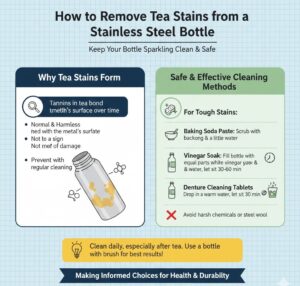
Tea contains tannins, which are natural polyphenols responsible for tea’s color and astringent taste. When tea comes into contact with a surface—especially when hot—these compounds tend to adhere and remain after the liquid is gone.
Tea stains are:
- Organic residue
- Surface-level discoloration
- Not mold, bacteria, or rust
Why Stainless Steel Still Gets Stained
Stainless steel is corrosion-resistant, not stain-proof. At a microscopic level, its surface contains tiny irregularities that allow tannins to bind. Over repeated use, these compounds accumulate and become visible.
Staining does not mean the stainless steel has degraded. It simply indicates residue buildup on the surface.
How to Remove Tea Stains from a Stainless Steel Bottle
Most tea stains can be removed using gentle household methods. Always start with the mildest option before moving to stronger approaches.
Method 1: Baking Soda and Warm Water
This is the safest and most commonly recommended cleaning method.
Why does it work: Baking soda is mildly alkaline and breaks down tannin residue without scratching stainless steel.
שלבים:
- Fill the bottle with warm water
- Add one to two teaspoons of baking soda
- Let the mixture sit for 30 to 60 minutes
- Gently scrub with a soft bottle brush
- יש לשטוף היטב
This method works well for regular maintenance and moderate staining.

Method 2: Baking Soda Paste for Heavier Stains
For stains that have built up over longer periods, paste provides more direct contact.
שלבים:
- Mix baking soda with a small amount of water to form a thick paste
- Apply the paste to stained areas
- Gently scrub with a soft sponge or brush
- יש לשטוף היטב
Allowing the paste to sit for 10 to 15 minutes before scrubbing improves effectiveness.

How to Remove Tea and Coffee Stains from a Stainless Steel Thermos
Insulated bottles and thermoses often develop heavier stains because tea stays hot longer and remains in contact with the interior for extended periods.
Why Thermos Stains Are Harder to Remove
- Prolonged heat accelerates tannin bonding
- Narrow openings limit access for scrubbing
- Stains tend to build up gradually over time
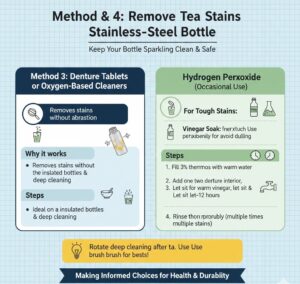
Method 3: Denture Tablets or Oxygen-Based Cleaners
These cleaners are highly effective for insulated bottles.
שלבים:
- Fill the thermos with warm water
- Add one or two denture cleaning tablets
- Let the solution sit for one to two hours
- יש לשטוף היטב
This method removes stains evenly without abrasion and is suitable for periodic deep cleaning.
Method 4: Hydrogen Peroxide (Occasional Use)
Hydrogen peroxide can be used for stubborn stains, but it should not be part of regular cleaning.
שלבים:
- Use a 3% hydrogen peroxide solution
- Swirl inside the bottle to coat the interior
- Let it sit for 10 to 15 minutes
- Rinse thoroughly multiple times
Frequent use is unnecessary and may dull the interior surface over time.
Comparison of Tea Stain Removal Methods
暂时无法在飞书文档外展示此内容
How to Clean Without Scratching Stainless Steel
Surface scratches make future staining worse by increasing the number of areas where tannins can attach.
Recommended Cleaning Tools
- Soft bottle brushes
- Non-abrasive sponges
- Microfiber cloths
Tools to Avoid
- Steel wool
- Metal scrubbers
- Abrasive powders
Scratching the interior reduces the long-term stain resistance of stainless steel.
Vinegar and Lemon: When They Are Useful
Acidic cleaners such as vinegar or lemon juice are often suggested, but they are not always ideal for tea stains.
When They Help
- Removing odors
- Dissolving mineral deposits
- Supporting other cleaning methods
When They Are Less Effective
- Removing pure tannin-based stains
- Treating heavy organic buildup
When used, acids should be diluted and followed by thorough rinsing.
How to Remove Old or Stubborn Tea Stains
Older stains respond better to time than force. Overnight soaking with baking soda or oxygen-based cleaners allows residue to soften naturally. Repeating gentle cleaning cycles is safer and more effective than aggressive scrubbing.
How to Prevent Tea Stains in Stainless Steel Bottles
Preventive habits significantly reduce staining.
Daily Practices
- Rinse the bottle immediately after use
- Avoid leaving tea in the bottle overnight
- Allow the bottle to air dry completely
Weekly Maintenance
- Rinse daily after use
- Clean once a week with baking soda
- Check lids and seals for residue
Does Tea Type Matter?
- Hot tea stains faster than cold-brew tea
- Black tea stains more than herbal varieties
Cleaning frequency should reflect what and how often you drink.

When Discoloration Is Not a Concern
Light discoloration without odor or taste changes does not affect safety. Stainless steel remains hygienic even when appearance is not perfect. Over-cleaning purely cosmetic stains can shorten the lifespan of the bottle.
Long-Term Care for Stainless Steel Bottles Used for Tea
Stainless steel bottles are designed for repeated daily use. Gentle cleaning, appropriate tools, and consistent habits preserve both appearance and performance. Harsh chemicals and abrasive scrubbing offer short-term results but create long-term problems.
מחשבות אחרונות
Tea stains in stainless steel bottles are a natural result of regular tea consumption. They are caused by tannins binding to the surface rather than material damage or contamination. With a proper understanding of how stains form and how stainless steel responds, cleaning becomes predictable and safe.
Using baking soda-based methods, avoiding abrasive tools, and maintaining simple daily habits are sufficient for keeping a stainless steel bottle clean and functional over the long term.
Frequently Asked Questions
Are tea stains inside stainless steel bottles harmful?
Tea stains themselves are not harmful. They are caused by tannins—natural compounds found in tea—that bind to the surface of stainless steel over time. These stains are cosmetic and do not indicate bacterial growth, rust, or contamination. As long as the bottle is cleaned regularly and does not develop persistent odors or residue buildup, it remains safe to use.
Can tea stains permanently damage a stainless steel bottle?
No, tea stains do not permanently damage food-grade stainless steel. The stains sit on the surface rather than altering the metal itself. Damage typically occurs only when abrasive tools or harsh chemicals are used repeatedly, which can scratch the interior and reduce stain resistance over time.
Why do tea stains come back so quickly after cleaning?
Tea stains often return when tannins are allowed to dry and bond to the surface repeatedly. This usually happens when tea is left in the bottle for long periods or when the bottle is not rinsed promptly after use. Scratched interiors can also make stains reappear faster because residue adheres more easily.
Is it safe to use baking soda regularly in stainless steel bottles?
Yes. Baking soda is non-abrasive and chemically mild, making it safe for regular use on stainless steel. Weekly cleaning with baking soda and warm water is widely recommended for preventing tea and coffee stain buildup without affecting the protective surface of the metal.
Why does my stainless steel bottle still smell after removing tea stains?
Odors usually come from residue trapped in bottle lids, seals, or narrow crevices rather than from the stainless steel itself. Even if the interior looks clean, seals and caps may require separate cleaning or soaking to fully eliminate smells.