How to Sew a Reusable Shopping Bag (Step-by-Step Guide for Beginners)
Reusable shopping bags have become an everyday essential. Whether for grocery shopping, daily errands, or food storage, reusable bags help reduce plastic waste and are often stronger and more practical than disposable options.
Learning how to sew a reusable shopping bag is a beginner-friendly sewing project that requires only basic tools and simple techniques. In this guide, you’ll learn what fabric works best, how to sew a shopping bag step by step, and how to make a durable bag suitable for daily use.
What Fabric Is Used for Reusable Shopping Bags?
The fabric you choose directly affects the strength, durability, and lifespan of a reusable shopping bag.
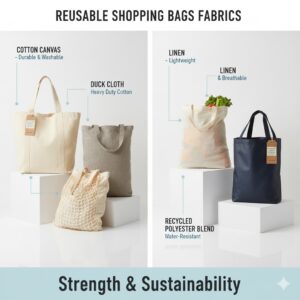
One of the most common materials is cotton canvas. Canvas is thick, durable, washable, and easy to sew, making it ideal for grocery bags that need to carry weight. Duck cloth, a tightly woven cotton fabric, offers similar strength and is also popular for reusable bags.
Linen is lighter and more breathable, suitable for light shopping or produce bags, but it is less durable for heavy loads. Polyester blends are another option, offering water resistance and quick drying, though they may not be as eco-friendly as natural fibers.
For most beginners, medium- to heavy-weight cotton canvas is the best balance between ease of sewing and durability.
What Is the Best Material for Reusable Food Storage Bags?
Reusable shopping bags and reusable food storage bags serve different purposes, and the materials should be chosen accordingly.
For reusable food storage bags, the best materials are those that are food-safe, washable, and moisture-resistant. Cotton with a food-safe lining, silicone-coated fabrics, or specially treated reusable food-safe textiles are commonly used.
Standard canvas shopping bags are suitable for carrying packaged food items but are not ideal for direct food storage, especially for wet or raw foods. If your goal is food storage rather than shopping, materials specifically labeled as food-safe should always be used.
Tools and Materials You’ll Need Before Sewing
Before starting, gather the necessary supplies. Most of these are basic sewing tools suitable for beginners.
You’ll need fabric (about half a yard to one yard, depending on bag size), matching thread, scissors or a rotary cutter, pins or clips, and a measuring tape. A sewing machine makes the process faster and stronger, but a reusable bag can also be sewn by hand with sturdy stitches.
Optional materials include interfacing for reinforcement and webbing or fabric strips for handles.
How to Make a Shopping Bag Step by Step
Start by deciding the size of your shopping bag. A common size is wide enough to hold groceries and tall enough for bottles or boxed items.
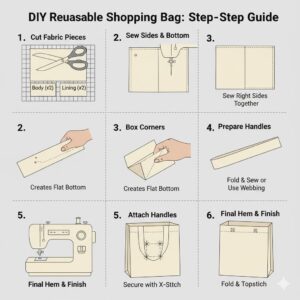
First, cut two identical rectangles of fabric for the bag body. These will form the front and back of the bag. If you want a sturdier bag, you can add a lining by cutting two additional pieces.
Next, place the fabric pieces together with the right sides facing inward. Sew along the sides and bottom, leaving the top open. Reinforce the seams by sewing a second line of stitching.
To create a flat bottom, pinch each bottom corner into a triangle shape and sew across the triangle. This step adds depth to the bag and allows it to stand upright.
For the handles, cut long fabric strips or use webbing. Fold and sew fabric strips to create strong handles, then attach them securely to the inside of the bag. Reinforce the handle area with extra stitching, as this is where most weight stress occurs.
Finally, fold the top edge of the bag inward and sew a clean hem to finish the bag.
How to Sew a Bag Step by Step: Beginner Tips
If you’re new to sewing, focus on straight seams and consistent stitch length. Take your time and pin pieces in place before sewing to avoid uneven lines.
Reinforcing stress points, such as handles and bottom corners, greatly improves durability. Using thicker thread or sewing over the same area twice adds strength without much extra effort.
Always test your stitches on scrap fabric before sewing the final bag.
Optional Customizations for Reusable Shopping Bags
Once you’re comfortable with the basic structure, you can customize your bag. Adding an inner pocket is useful for keys or small items. You can also adjust the size, make the bag foldable, or add closures such as buttons or snaps.
Customizing fabric color and handle length allows you to tailor the bag to specific uses, such as shoulder carrying or hand carrying.
Care and Washing Tips for Reusable Shopping Bags
Most cotton canvas bags are machine washable. Wash them regularly, especially after grocery shopping, to prevent odor and bacteria buildup.
Air drying helps preserve the fabric and stitching. Inspect seams occasionally, and repair small tears early to extend the bag’s lifespan.
Why Sewing Your Own Reusable Shopping Bag Is Worth It
Sewing your own reusable shopping bag gives you control over size, strength, and material quality. Compared to store-bought options, DIY bags can be more durable and better suited to your specific needs.
It’s also a cost-effective and environmentally responsible alternative to single-use plastic bags.
Conclusion
Learning how to sew a reusable shopping bag is a practical skill that combines sustainability with creativity. With the right fabric and simple steps, even beginners can create a durable, reusable bag suitable for everyday shopping.
By choosing appropriate materials and reinforcing key areas, your handmade bag can last for years.
FAQ – Reusable Shopping Bag Sewing
What fabric is best for sewing reusable shopping bags?
Medium to heavy cotton canvas or duck cloth is best for durability, washability, and ease of sewing.
Is it hard to sew a reusable shopping bag?
No. It’s considered a beginner-friendly sewing project and requires only basic skills.
Can I sew a reusable shopping bag without a sewing machine?
Yes. Hand sewing is possible, but a sewing machine provides stronger seams and faster results.
Are reusable shopping bags safe for food?
They are safe for carrying packaged food. For direct food storage, use food-safe materials designed for that purpose.