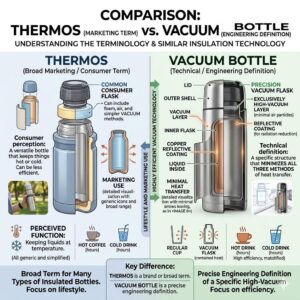
Stainless Steel vs Glass Vacuum Bottle: Which One Should You Really Choose?
Introduction: It’s Not Just About “Material”—It’s About Real Use
If you’ve ever compared vacuum bottles, you’ve likely come across a common debate:
Is a stainless steel vacuum bottle better, or a glass one?
At first glance, the answer seems simple—glass is “pure,” stainless steel is “durable.”
But in real-world use, the decision is far more nuanced.
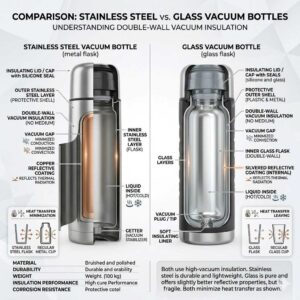
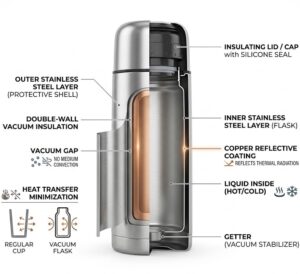
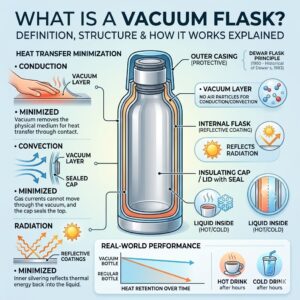
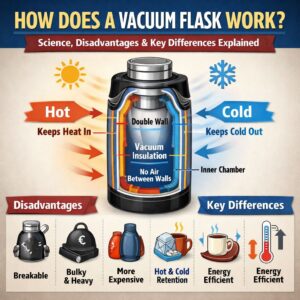
From a product engineering and manufacturing perspective, both types rely on the same core principle: a double-wall vacuum structure designed to minimize heat transfer. According to the vacuum insulation used in thermos flasks, removing air between layers significantly reduces conduction and convection, which is why both materials can achieve strong insulation performance.
However, once you move beyond theory and into actual usage, factors like taste, durability, maintenance, and daily convenience become the real deciding points.
In this guide, we break down the differences in a practical, experience-driven way—so you can choose based on how you actually use your bottle.
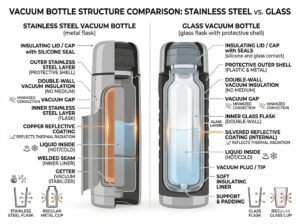
Structural Differences: Same Principle, Different Execution
Both stainless steel and glass vacuum bottles use:
- Double-wall construction
- Vacuum insulation layer
- Sealed inner chamber
But the key difference lies in the inner liner material.
Stainless Steel Inner Liner
- Metal-based structure
- Welded and sealed
- High mechanical strength
This allows for:
- Strong impact resistance
- Long-term vacuum stability
- Compatibility with mass manufacturing
Glass Inner Liner
- Non-metallic, chemically inert material
- Typically enclosed within an outer protective shell
This design focuses on:
- Taste purity
- Chemical stability
Expert Insight
From a manufacturing standpoint, stainless steel offers more flexibility and reliability in production. Glass, on the other hand, prioritizes sensory experience over structural resilience.
Taste & Beverage Experience: Where Glass Still Wins
Why Glass Preserves Flavor Better
Glass is widely recognized as a chemically inert material, meaning it does not react with beverages.
This makes it particularly suitable for:
- Coffee
- Tea
- Herbal drinks
- Juice
Several industry discussions and material studies confirm that glass does not retain or transfer flavors, making it ideal for users who are sensitive to taste changes
When Stainless Steel May Affect Taste
In real-world usage, stainless steel bottles can sometimes:
- Retain odors over time
- Slightly alter taste (especially with acidic liquids)
This is more noticeable when:
- The bottle is not cleaned thoroughly
- Drinks are stored for long periods
Real Industry Perspective
Modern food-grade stainless steels like 304 and 316 have significantly improved in terms of taste neutrality.
However:
If your top priority is pure flavor preservation, glass still has a slight edge.
3. Heat Retention: What Actually Determines Performance
The Common Misunderstanding
One of the most widespread misconceptions is that:
“Glass keeps heat better than stainless steel”
or
“Metal conducts heat, so it must be worse”
While this sounds logical, it is incomplete from an engineering perspective.
The Real Key: Vacuum Integrity (Not the Material)
In a properly designed thermos, the dominant factor is vacuum insulation, not the liner material.
Heat transfer occurs through:
- conduction (solid contact)
- convection (air movement)
- radiation (infrared heat loss)
When a vacuum is created between the inner and outer walls:
- conduction is minimized (no medium)
- convection is eliminated (no air circulation)
This principle is the foundation of modern thermos design.
Why Material Still Matters (But Indirectly)
Although the material does not directly determine insulation, it affects:
- vacuum stability over time
- resistance to deformation and micro-leakage
- structural integrity under thermal cycling
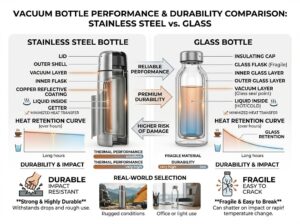
Practical Performance Comparison
Μπουκάλια από ανοξείδωτο χάλυβα
In real production and usage, stainless steel bottles tend to perform more consistently because:
- they can withstand pressure changes, temperature cycling, and minor impacts
- the vacuum seal is less likely to degrade over time
- they are more resistant to micro-cracks
Result: more stable long-term heat retention
Glass Vacuum Bottles
Glass liners can achieve excellent insulation when perfectly intact.
However:
- glass is brittle
- small internal cracks, often invisible, can break the vacuum
- insulation performance may drop significantly after impact
Result: performance can decline suddenly after damage
Real-World Insight
In product testing and user feedback, two bottles with identical specifications can perform very differently after several months.
The primary reason is vacuum degradation, not material conductivity.
Expert Conclusion
In real-world usage, insulation performance is primarily determined by vacuum quality and sealing integrity. Stainless steel bottles tend to maintain that performance longer due to superior structural stability.
4. Durability: The Biggest Real-World Difference
Why Durability Is the Deciding Factor for Most Users
From a technical perspective, both materials can provide strong insulation. However, in daily use, durability often becomes the deciding factor.
Stainless Steel: Built for Real Life
Stainless steel bottles are engineered for mechanical resilience.
They can:
- absorb impact without structural failure
- maintain vacuum integrity after drops
- resist deformation under pressure
Typical Real-Life Scenarios
- dropped from a desk
- carried in a backpack
- used during travel or outdoor activities
In all of these cases, stainless steel performs reliably.
Glass: Structurally Vulnerable
Glass liners are typically enclosed within an outer shell, but internally they remain:
- brittle
- sensitive to shock
- vulnerable to thermal stress
Even minor damage can lead to:
- internal cracks
- vacuum loss
- performance failure
Thermal Shock Risk
Glass is also more sensitive to rapid temperature changes, such as pouring boiling water into a cold bottle. This can lead to thermal stress fractures.
Practical Industry Insight
From a manufacturing and after-sales perspective, most failures in glass thermos bottles are related to handling conditions rather than design flaws.
Expert Takeaway
Stainless steel is not necessarily superior in theory, but it is significantly more reliable under real-world conditions.
5. Cleaning and Hygiene: Maintenance Differences
Glass Bottles: Naturally Neutral
Glass has a major advantage: it is non-porous and chemically inert.
This means:
- no flavor absorption
- no odor retention
- easy cleaning
Best Use Cases for Glass
- coffee
- tea
- juice or herbal beverages
Glass is ideal when taste clarity is important.
Stainless Steel Bottles: Requires Proper Care
Stainless steel is hygienic but not completely neutral over time.
In practice, users may experience:
- residual odors
- flavor carryover
This is more likely when:
- bottles are not cleaned regularly
- beverages are stored for long periods
Why This Happens
Even though stainless steel is corrosion-resistant:
- surface micro-texture can trap residues
- organic compounds from beverages may linger
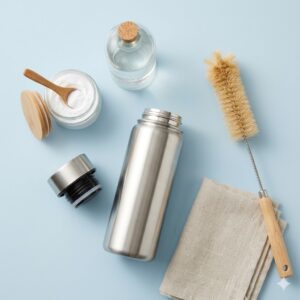
Cleaning Recommendations
For optimal hygiene:
- use baking soda or vinegar for deep cleaning
- avoid leaving liquids inside for extended periods
- dry the bottle thoroughly after washing Real Usage Insight
Users who frequently switch between beverages, such as coffee, tea, and water, may notice:
- glass remains neutral
- stainless steel requires more maintenance
6. Safety Considerations
Glass Bottles: Hidden Risks
The main safety concern with glass is failure under stress.
Potential risks include:
- breakage from impact
- internal cracking that may not be visible
- sudden loss of vacuum integrity
According to vacuum flask references, glass liners can break due to mechanical or thermal stress.
Stainless Steel Bottles: Safer for Daily Use
Stainless steel offers:
- structural integrity
- impact resistance
- predictable behavior under stress
Even when damaged:
- it dents rather than shatters
- it often remains usable
Practical Safety Insight
For environments such as commuting, gym use, and outdoor activities, stainless steel is significantly safer.
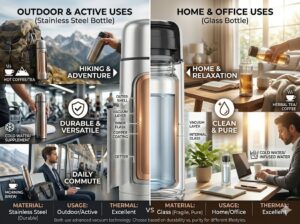
7. Which One Should You Choose?
Instead of asking which material is better, the more relevant question is which one fits your usage scenario.
Choose Glass If:
- you prioritize taste purity
- you mainly use the bottle at home or in an office setting
- you drink coffee, tea, or other flavor-sensitive beverages
Choose Stainless Steel If:
- you need durability and portability
- you use the bottle for commuting, travel, gym, or outdoor activities
- you want consistent performance with minimal risk
Expert Decision Logic
Glass prioritizes sensory experience.
Stainless steel prioritizes practical performance.
8. Why Stainless Steel Dominates Modern Use
Market Reality: Lifestyle Drives Material Choice
In today’s market, user preferences increasingly focus on:
- mobility
- durability
- multi-scenario usability
Why Stainless Steel Fits Modern Needs
Stainless steel bottles offer:
- better resistance to real-life conditions
- longer usable lifespan
- lower risk of failure
Practical Product Direction
Products like the Stainless Steel Water Bottle reflect this shift in user expectations.
Modern designs focus on:
- double-wall vacuum insulation
- food-grade stainless steel
- lightweight and portable structure
These features align with real usage scenarios, including commuting, fitness, and travel.
Final Insight
Stainless steel has become the mainstream choice not because it is theoretically superior, but because it performs more reliably across real-world conditions.