Can I Freeze Water in a Stainless Steel Bottle? Everything You Should Know
Freezing water in a paslanmayan polad bottle sounds simple, but it’s a question that causes a lot of confusion. Some people freeze their bottles regularly with no problems, while others end up with warped bottles, broken lids, or insulated bottles that no longer keep drinks cold.
So what’s the real answer?
The short version is: stainless steel itself is safe in the freezer, but whether you should freeze water in a stainless steel bottle depends on the bottle’s design, how full it is, and how it’s sealed.
This guide explains what actually happens when water freezes inside a stainless steel bottle, which types of bottles are freezer-safe, which ones are not, and how to avoid damaging your bottle.
Key Takeaways
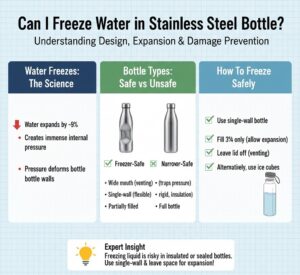
- Stainless steel does not crack or shatter when frozen
- The main risk comes from water expansion, not the metal
- Freezing is safer in single-wall bottles than insulated ones
- Vacuum-insulated bottles are the most likely to be damaged
- Leaving headspace and loosening the lid greatly reduces risk
Is Stainless Steel Safe to Freeze?
From a material science perspective, yes.
Stainless steel is highly resistant to low temperatures. Unlike glass, it does not become brittle in the freezer. Unlike some plastics, it does not crack or weaken when exposed to cold.
Stainless steel is commonly used in:
- cryogenic environments
- food storage
- laboratory equipment
Cold temperatures alone do not damage stainless steel.
However, freezing water is not just about temperature—it’s about physics.
The Real Risk: Water Expansion, Not the Metal
When water freezes, it expands by about 9%. This expansion creates pressure inside any rigid container.
If that pressure has nowhere to go, one of three things happens:
- The container deforms
- The lid or seal fails
- Internal structures (like vacuum insulation) are damaged
Stainless steel is strong, but it is not flexible enough to absorb unlimited internal pressure. This is why bottle design matters more than material.
Can You Freeze Water in a Stainless Steel Water Bottle?
When Freezing Is Generally Safe
Freezing water is usually safe if the bottle:
- Is single-wall stainless steel
- Is filled only 70–80% full
- Is left upright
- Has the lid loosely placed or removed
Single-wall bottles allow pressure to escape upward as ice forms, reducing the risk of deformation.
When Freezing Is Risky
Freezing becomes risky when:
- The bottle is filled completely to the top
- The lid is tightly sealed
- The bottle has a narrow neck
- The bottle is vacuum insulated
In these cases, ice expansion has nowhere to go, and pressure builds internally.
Why Headspace Is Critical
Ice expands upward and outward. If there is no empty space at the top of the bottle, pressure pushes against:
- the bottle walls
- the neck
- the lid threads
This is the most common reason stainless steel bottles warp or lids become permanently stuck after freezing.
Can You Freeze Water in a Stainless Steel Tumbler?
This is where many people run into trouble.
Tumblers vs Regular Bottles
Stainless steel tumblers are often:
- wider
- shorter
- designed for ice, not freezing
They are excellent for adding ice, but not always for freezing water solid.
Vacuum-Insulated Tumblers and Freezing
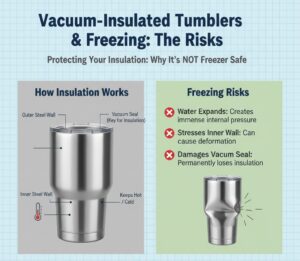
Most tumblers are double-wall vacuum insulated. This means there is a sealed vacuum layer between two steel walls.
Freezing water inside these tumblers can:
- create uneven internal pressure
- stress the inner wall
- compromise the vacuum seal
Once the vacuum seal is damaged, the tumbler will permanently lose its insulation performance—even if it looks fine on the outside.
Common Freezer Mistakes with Tumblers
- Freezing with the lid fully sealed
- Freezing carbonated or flavored liquids
- Laying the tumbler on its side
- Filling to the brim
Any of these significantly increase damage risk.
Can You Put Ice in a Stainless Steel Water Bottle?
Yes—adding ice is far safer than freezing water.
Ice vs Freezing: Why It’s Different
- Ice cubes already expanded before entering the bottle
- There is no internal pressure buildup
- The bottle remains structurally unstressed
This is why most manufacturers recommend adding ice instead of freezing the bottle itself.
Best Practices for Adding Ice
- Add water first, then ice
- Avoid overfilling
- Use medium-sized ice cubes
- Do not force the lid closed
Can You Put Stainless Steel Water Bottles in the Fridge?
Yes. Refrigeration is safe for all types of stainless steel bottles.
Why the Fridge Is Low Risk
- No ice expansion
- Minimal pressure changes
- No stress on insulation layers
If your goal is cold water rather than ice, the fridge is the safest option.
Fridge vs Freezer: Key Differences
| Xüsusiyyət | Fridge | Freezer |
| Temperature | Above freezing | Below freezing |
| Water expansion | yox | Bəli |
| Pressure risk | Minimal | High if sealed |
| Insulation damage | Unlikely | Possible |
What Happens If You Freeze a Stainless Steel Bottle Incorrectly?
Potential Damage
- Bottle walls may bulge or dent
- Lid threads may warp
- Seals may leak
- Vacuum insulation may fail
Some damage is subtle and only noticeable later.
Signs Your Bottle May Be Damaged
- Drinks no longer stay cold or hot
- Lid becomes difficult to open
- Bottle rocks on a flat surface
- You hear rattling or popping sounds
Vacuum damage is irreversible.
Best Practices for Freezing Water Safely in Stainless Steel Bottles
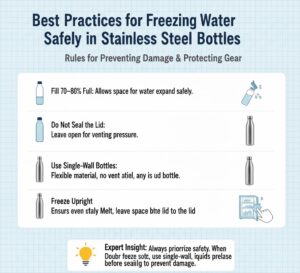
If you choose to freeze water, follow these rules:
- Fill the bottle only 70–80% full
- Do not tighten the lid
- Use single-wall bottles whenever possible
- Freeze upright
- Allow ice to partially melt before sealing
These steps significantly reduce pressure buildup.
Who Should Avoid Freezing Stainless Steel Bottles?
Freezing is not recommended if you use:
- Vacuum-insulated bottles
- High-end thermal tumblers
- Bottles with narrow necks
- Bottles with complex lid mechanisms
In these cases, adding ice or using the fridge is safer.
Final Verdict: Can You Freeze Water in a Stainless Steel Bottle?
Yes, you can freeze water in a stainless steel bottle—but only under the right conditions.
Stainless steel itself is freezer-safe, but bottle design and user behavior determine whether freezing is safe or damaging. Single-wall bottles with headspace handle freezing best. Vacuum-insulated bottles are far more vulnerable.
If your goal is cold water rather than solid ice, refrigeration or adding ice is the safer and more reliable choice.
FAQ
Is stainless steel safe to freeze? Yes. Stainless steel handles low temperatures very well.
Can stainless steel bottles crack in the freezer? They usually don’t crack, but they can deform or lose insulation if frozen incorrectly.
Can I freeze water overnight in a stainless steel bottle? Yes, if it’s not full and the lid is loose.
Why did my insulated bottle stop keeping drinks cold after freezing? Freezing may have damaged the vacuum insulation layer.